Awkward corners can make a large cleaning brush feel useless even when its bristles are suitable for the surface. The handle may hit a wall before the head reaches the recess, or the head may be too wide to enter a track. Before buying a specialist brush, identify the exact gap and the direction from which you can approach it. A simple narrow brush with a comfortable grip often earns more use than a set of unusual shapes bought without a specific cleaning problem in mind.
Measure the gap and approach
Photograph or measure the area that is difficult to clean: a tap base, a door track or the joint behind a fixture. Include the space around it, since the handle needs room to move as well as the bristles. A long thin head may reach a recess yet leave no room for a useful stroke. Check the total tool length and the angle between head and handle. For a deep channel, look for a shape that can withdraw the loosened debris.
Match bristles to the finish
Cleaning force and surface compatibility are separate questions. Check the fixture or surface manufacturer's care guidance before choosing stiff bristles, scraping edges or abrasive features. A brush sold for grout should not automatically be used on every nearby coating. Where permitted, try a discreet area with light pressure before working across a visible surface. If the problem is a stain rather than accessible loose dirt, buying a harder brush may not solve the underlying issue.
Think about the grip when wet
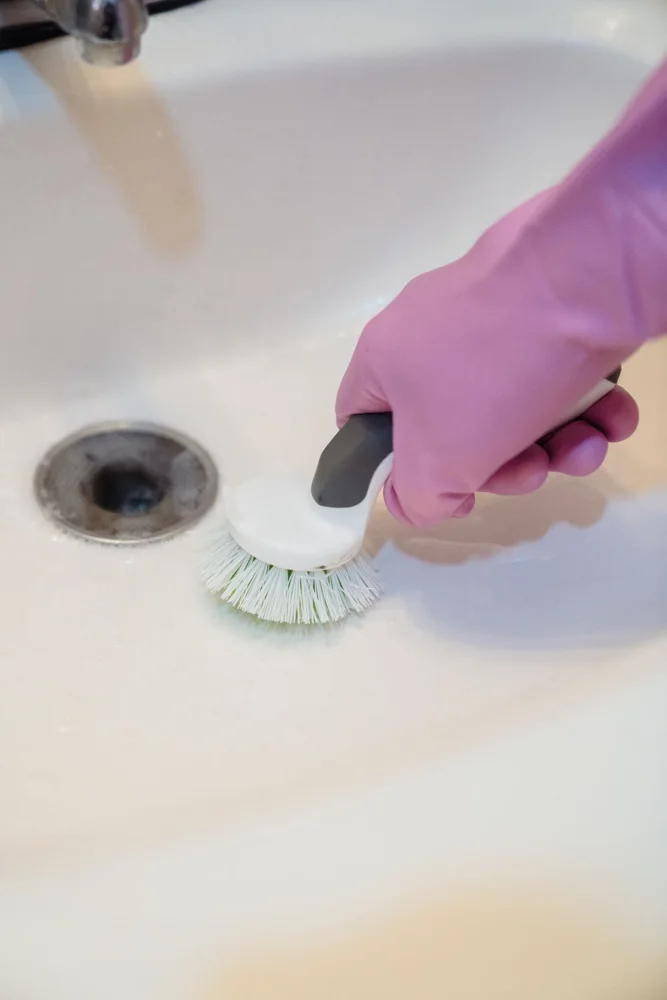
A compact handle is convenient in a drawer but may be harder to hold for a repeated scrubbing motion. Look at where your fingers sit and whether there is space between your hand and nearby edges. A soft grip can improve handling, yet its seams add places to inspect during cleaning. If you wear household gloves, consider the fit with those gloves on. The shape should help guide the head rather than require a forceful pinch throughout the task.
Avoid creating a brush collection
Choose one or two shapes for recurring jobs and give them defined uses. Keep a kitchen detail brush separate from bathroom cleaning tools. Check that the head rinses easily and can dry with air around the bristles. A hanging hole or small rack may be more useful than an elaborate storage case that holds damp tools together. Replacement heads are worth investigating when the handle is designed to accept them, but verify the precise connection before buying spares.
THE USEFUL TAKEAWAY
A detail brush should solve a named access problem. Choose its shape around the gap, its bristles around the finish and its grip around the motion you will repeat. Keep the collection small and assign each tool a clear role so specialist brushes remain useful instead of becoming drawer clutter.
Further information
Manufacturer and official references for the details discussed. Check instructions for the exact product you are considering.