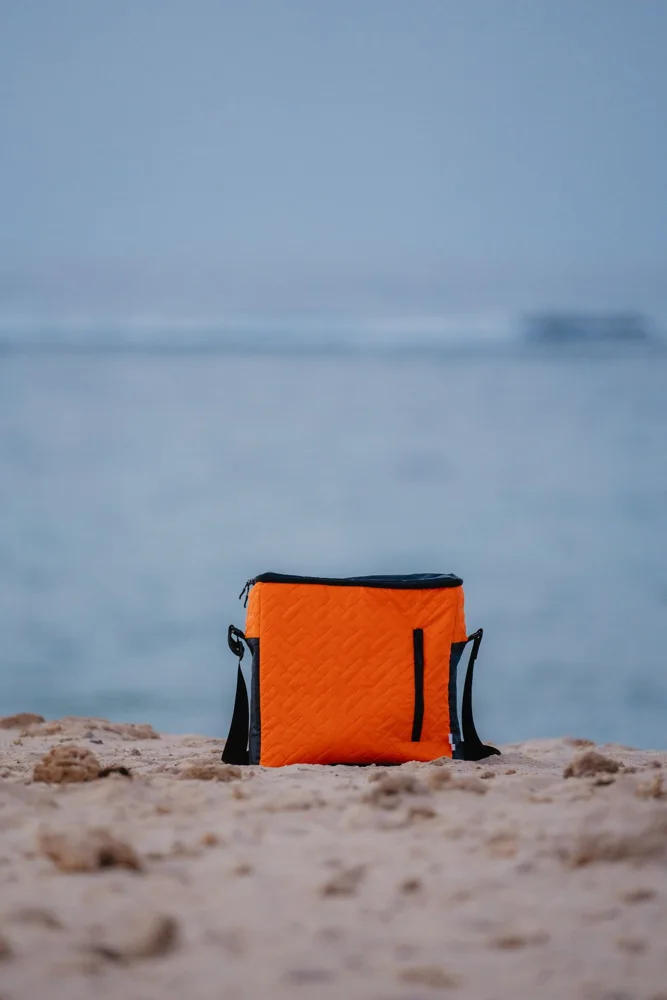
A cooler bag for a day outside should be sized around the things you carry and the way you travel. A large capacity is less helpful when the packed bag is awkward to lift or leaves no room for the cooling arrangement. Advertised can counts can also describe a different load from lunch containers and bottles. Arrange a typical outing's contents first. Then compare usable space, closure, carrying comfort, and care instructions rather than treating an impressive cooling claim as the whole decision.
Include cooling materials in the packing plan
Put the intended containers, drinks, and the cooling materials specified for your use together before measuring. A capacity figure may not describe that exact arrangement. Check internal width and height, especially if bottles need to stand upright. Follow the cooler's instructions and the appropriate storage guidance for any food you carry. An insulated bag does not establish that every product remains suitable for an arbitrary length of time. For buying purposes, prioritize space for a workable arrangement rather than filling every available gap with additional goods.
Judge the closure while the bag is loaded
A wide opening makes loading boxes easier, while a narrower opening can be awkward even when the interior is large. Check how the zip, roll top, or other closure works with realistic contents. Read the product's statements about leakage and carrying position instead of assuming a soft cooler can lie on its side. YETI's Hopper owner manual provides model-specific care and operating information, illustrating why instructions matter. A stiff closure may be acceptable for occasional use but frustrating when several people access the bag repeatedly.
Consider the full carry
Compare empty weight and the complete expected load. Short handles, shoulder straps, and backpack straps suit different distances. Look at padding, adjustment, and how attachments connect to the bag. A broad bag can knock against your leg even when its strap is comfortable. If a trolley or bicycle rack is part of the plan, confirm the intended carrying method and fit rather than improvising around decorative loops. A smaller bag may be the better choice when the journey includes stairs or a long walk.
Make the return home manageable
Inspect the liner's corners, seams, and cleaning access. Read whether the bag folds for storage and whether repeated folding is part of its intended design. Drying space matters after cleaning; a deep bag with a narrow opening may be inconvenient to leave open. Check the care requirements for the closure and any removable parts. Additional pockets are useful for items that need to stay separate, but they do not increase the insulated compartment. Compare the bag as something you must empty, clean, and store after every outing.
THE USEFUL TAKEAWAY
Choose a cooler bag around the complete packed arrangement and journey. Usable space, a manageable closure, and carrying comfort deserve as much attention as capacity. Follow model-specific instructions and the relevant guidance for the contents; a practical bag is one you can load, transport, clean, and store consistently.
Further information
Manufacturer and official references for the details discussed. Check instructions for the exact product you are considering.