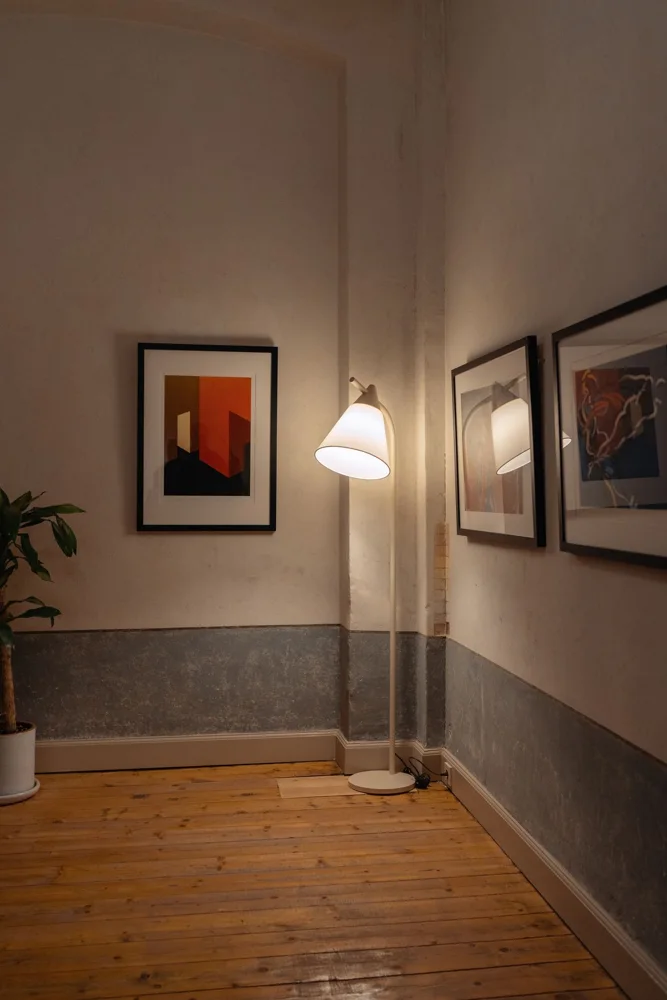
A floor lamp can bring light beside a sofa without another table, but its base, shade, and cable still need room. Arc lamps, upright shaded lamps, and adjustable reading lamps create very different footprints. Start by identifying where light is missing and where people walk. Then compare the lamp in its complete working position rather than the narrow pole shown in a listing. A useful design should support the room's normal activities while remaining accessible to switch on, adjust, and maintain.
Choose the lighting task
Lighting a reading chair is a different job from adding general light to a corner. Identify the main task before comparing shapes. An adjustable head may direct light toward a book, while a broad shade creates another pattern. Consider whether you can see the light source from the seat and how the lamp relates to existing lighting. A very large decorative shade may suit the room visually but still leave the intended task poorly served. Look for clear information about the design's intended use.
Mark base and shade separately
Measure the base's widest point and mark it on the floor. Then account for the shade or arc extending over the sofa, walkway, or table. A lamp can have a small pole footprint and a substantial reach overhead. Check the complete adjustment range and the manufacturer's setup instructions. Do not assume a base can be hidden under furniture unless the design permits it. The lamp should fit in its intended arrangement without requiring an improvised position to make the room passable.
Plan the cord and control
Locate a suitable socket and compare the supplied cable length. A foot switch needs an accessible position rather than a place behind a heavy sofa. A switch near the shade requires another kind of reach. Follow the lamp's electrical and placement instructions, including any relevant clearance requirements. If a dimmer is included, check its compatibility with the light source. Extra remote controls or app features add value only if the household will use them and the ordinary controls remain practical.
Check light-source replacement and care
Compare lumen information for brightness rather than treating power use as the same thing; ENERGY STAR explains that distinction. For replaceable bulbs, confirm the socket, physical fit, and permitted rating. For integrated lighting, read the service and replacement guidance. A fabric shade and a smooth metal head need different cleaning. Adjustable joints may also need the handling described by the maker. The lamp's ongoing usefulness depends on accessible maintenance as well as the first impression it makes in the corner.
THE USEFUL TAKEAWAY
Choose a floor lamp around the activity it supports and its full room footprint. Base size, overhead reach, cable routing, and control access should agree before you buy. Compare brightness separately from power use, and check how the light source and shade will be maintained over time.
Further information
Manufacturer and official references for the details discussed. Check instructions for the exact product you are considering.