Measuring cups should be easy to find, fill, and put away. In a compact drawer, a large nested set can become inconvenient if handles snag or a connecting ring prevents you from using one cup comfortably. The useful combination depends on the recipes you follow and whether you already weigh ingredients. Before buying more sizes, separate the jobs of measuring dry ingredients, pouring liquids, and handling small quantities so that every piece has a reason to be there.
Check how your recipes measure
Look through a few recipes you make repeatedly. If they give ingredient weights and you own a suitable scale, you may need fewer dry cups than a large set provides. When using volume measurements, distinguish a cup intended to be filled and leveled from a jug with a marked liquid line and pouring space. King Arthur's recipe guidance explains that distinction. Choose markings in the units your recipes use rather than relying on an unfamiliar conversion each time.
Test the drawer footprint
Measure the drawer's internal height and the footprint available among other tools. A nested stack may be compact from above but surprisingly tall at the handles. If a ring holds the set together, check whether it opens easily and whether the cups separate without forcing them. Long handles can be useful for reaching into a bag, yet they need more drawer space. The smallest cup should not disappear underneath a larger one where it is hard to retrieve.
Inspect rims, handles, and markings
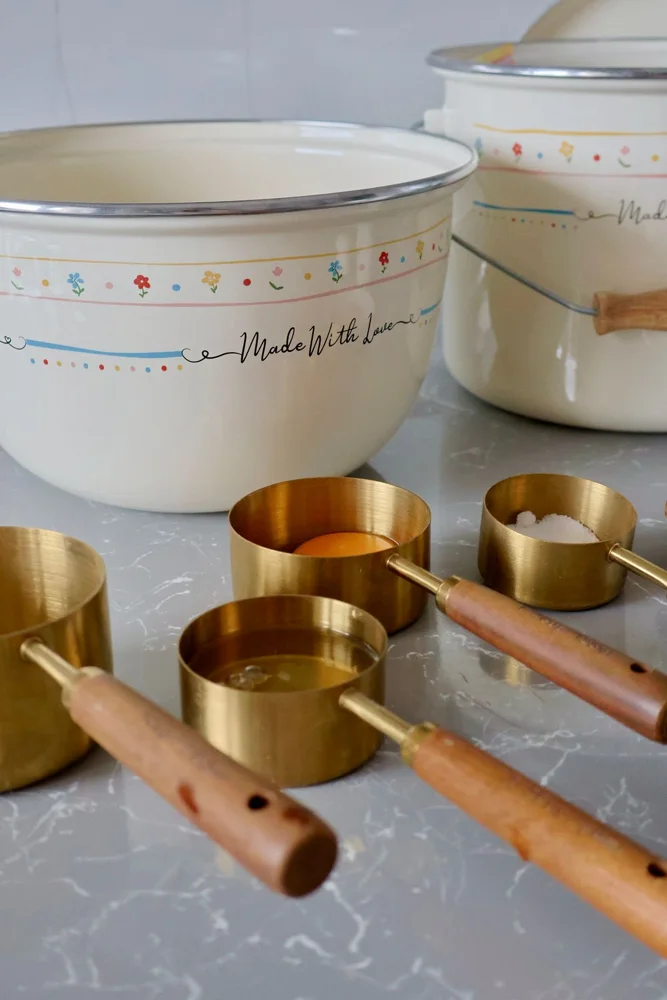
For dry ingredients, a straightforward rim makes leveling easier. Check whether the handle feels secure when the cup is full and whether it creates an awkward corner to wash. Markings should remain readable from the position in which you use the cup. Molded or engraved labels may be convenient, but visibility still depends on contrast and lighting. If your ingredient containers have narrow mouths, compare their openings with the cup's widest part before assuming you can scoop directly.
Keep the useful sizes available
An unusual fractional size earns its place only if you reach for it. A smaller set can be easier to organize, while a separate measuring jug may handle liquids more comfortably than several rigid cups. Check cleaning guidance for the exact material, particularly if handles include a different finish. Avoid buying a replacement set simply because one cup is missing; a single size or a scale may solve the actual problem with less clutter in the drawer.
THE USEFUL TAKEAWAY
A compact measuring setup should support the recipes you use and fit the drawer without snagging. Choose clear markings, accessible sizes, and a useful pouring jug where needed. An extensive set offers little extra value when most ingredients are already weighed or only a few cups see regular use.
Further information
Manufacturer and official references for the details discussed. Check instructions for the exact product you are considering.