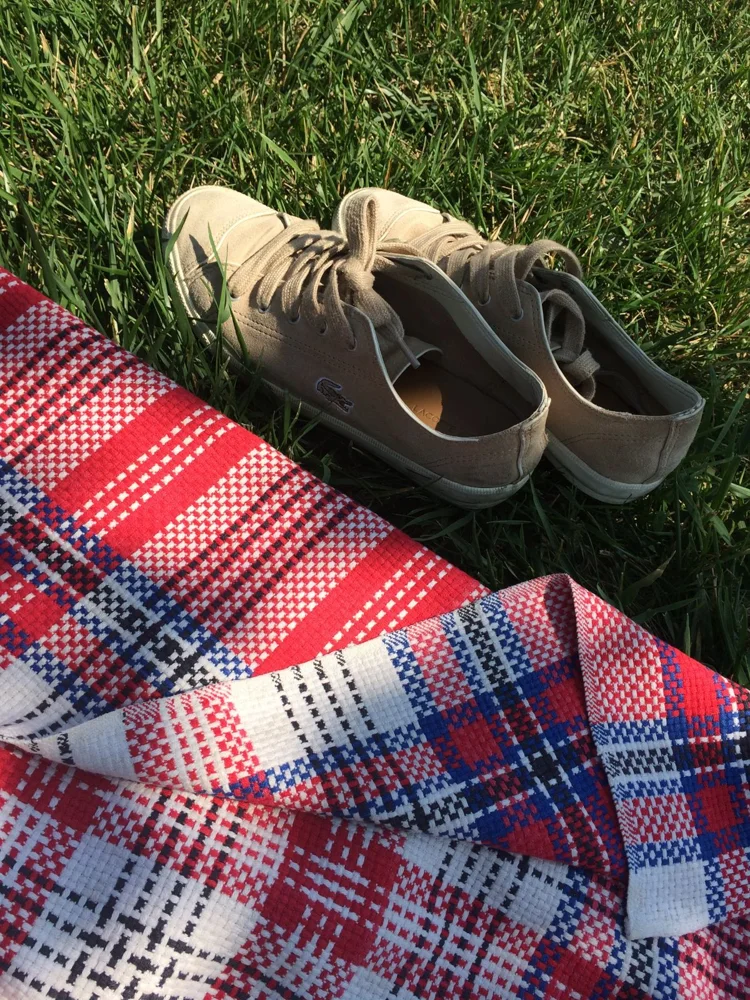
A picnic blanket needs to fit people and food when open, then fit the bag or carrying arrangement when packed. Those two sizes can differ dramatically between materials. A soft padded blanket may be pleasant to sit on but bulky to transport, while a thin sheet may pack easily without the feel you want. Start with the usual outing and surface. A park lunch reached on foot creates different priorities from a blanket carried a few steps from a car.
Model the space you actually occupy
Lay out the bags, food containers, and seating positions on a floor. Compare that footprint with the blanket's dimensions instead of relying on a people-count label. Sitting with legs extended takes more space than sitting upright, and a cooler bag can occupy a substantial corner. If several people often bring their own small blankets, one enormous blanket may be unnecessary. Consider whether the shape leaves room to reach the food without moving every time someone changes position. Usable space matters more than a generous photograph.
Choose layers for the intended surface
Check the top fabric and backing separately. A product described as water-resistant should not automatically be treated as suitable for standing water; read its stated use and limitations. Padding changes the feel on hard ground but adds bulk. A smooth backing may wipe clean easily, while a textured surface can collect small debris. If the blanket is primarily for dry grass, a simple washable textile might already meet the need. Choose a specialized backing when it solves a real problem in your usual outings.
Try the folding system before valuing it
An integrated flap, strap, or carrying handle is useful only when the blanket can be folded into it without excessive effort. Check the packed dimensions and whether the closure has room for a less-than-perfect fold. A separate pouch can be lost, but it may offer more flexibility than a tightly fitted built-in arrangement. Consider who carries the blanket and what else they hold. A shoulder strap can free a hand while adding hardware that must be kept away from the sitting surface during use.
Read cleaning instructions for the complete product
The top may appear washable while the backing or padding requires a different routine. Check whether the blanket can go into your washing machine by both instruction and practical size. Read drying requirements and allow space to dry it fully before packing. After an outing, remove loose debris in a suitable place rather than shaking it into a bag with other items. An easy-clean blanket that is slightly less plush can be a better everyday choice if the alternative repeatedly remains unused because washing is inconvenient.
THE USEFUL TAKEAWAY
Choose a picnic blanket around open space, packed size, and the cleaning routine. A backing or padded layer is worthwhile when it suits the surfaces you use. The best value is a blanket that reaches the outing comfortably and can be cleaned and packed again without becoming a household chore.