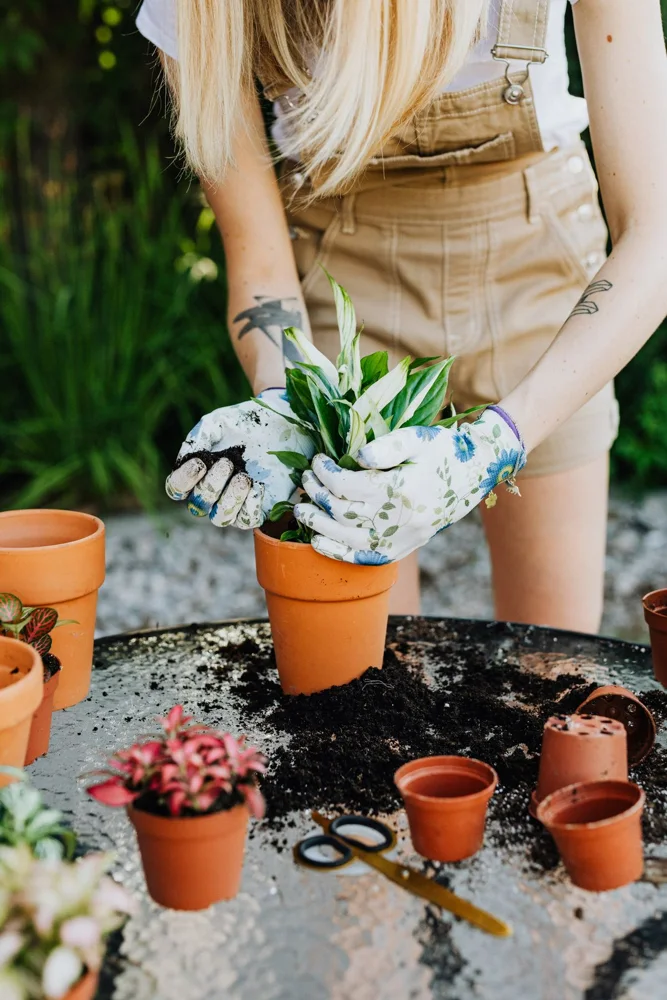
A plant pot has two related jobs: holding the growing medium and fitting the place where the plant lives. Attractive outer containers do not always perform both. Before choosing a decorative pot, decide whether the plant will be planted directly in it or remain in a separate nursery pot inside. That choice affects drainage, watering access, weight, and cleaning. Measure the existing plant container and the available surface so the new purchase supports the practical routine as well as the appearance.
Distinguish a growing pot from an outer cover
The RHS emphasizes drainage holes for containers used to grow plants. A decorative cover without holes can hold a separate growing pot, but it needs a deliberate watering arrangement. Check that the inner pot can be removed easily and that excess water can be managed according to the plant's needs. Do not assume a layer of decorative material turns a closed container into a drained one. Read the plant's relevant care information rather than choosing a watering routine solely around the outer pot's appearance.
Measure the usable interior
The outside diameter can include a thick rim or taper that reduces space lower down. Measure the nursery pot at its widest point and compare the internal opening and base. Leave enough room to lift it out without trapping fingers. A very deep outer pot may hide a small plant and make watering awkward. If the listing gives only external dimensions, ask for internal measurements or choose a product with clearer information. Matching the fit prevents buying extra fillers or another pot immediately afterwards.
Consider weight in the full arrangement
A pot that is easy to lift empty can become much heavier once it contains the plant, medium, and water. Think about the shelf, stand, windowsill, or balcony location and follow any relevant limits for those supports. A handle or broad rim can help with moving only if it is intended for that purpose. For large arrangements, plan access before planting. A lighter material may be convenient when plants move seasonally, while a heavier container can be appropriate when it stays in one suitable location.
Check the saucer and cleaning access
If a saucer is needed, check whether it is included and whether it fits the base with enough usable area. Consider how water is removed without marking the surrounding surface. Inspect the interior finish and any recesses that make cleaning difficult between plants. Outdoor suitability and weather-care requirements should come from the actual product information; similar-looking ceramics can have different stated uses. Buying a pot and saucer as a practical combination is more useful than choosing the pot first and improvising an awkward catch tray later.
THE USEFUL TAKEAWAY
Choose a plant pot around drainage, internal fit, and a manageable watering routine. Decorative covers can work well when the inner container remains accessible. Measure the complete arrangement and include the saucer where needed, so a good-looking purchase also suits the plant and the surface where it will live.
Further information
Manufacturer and official references for the details discussed. Check instructions for the exact product you are considering.