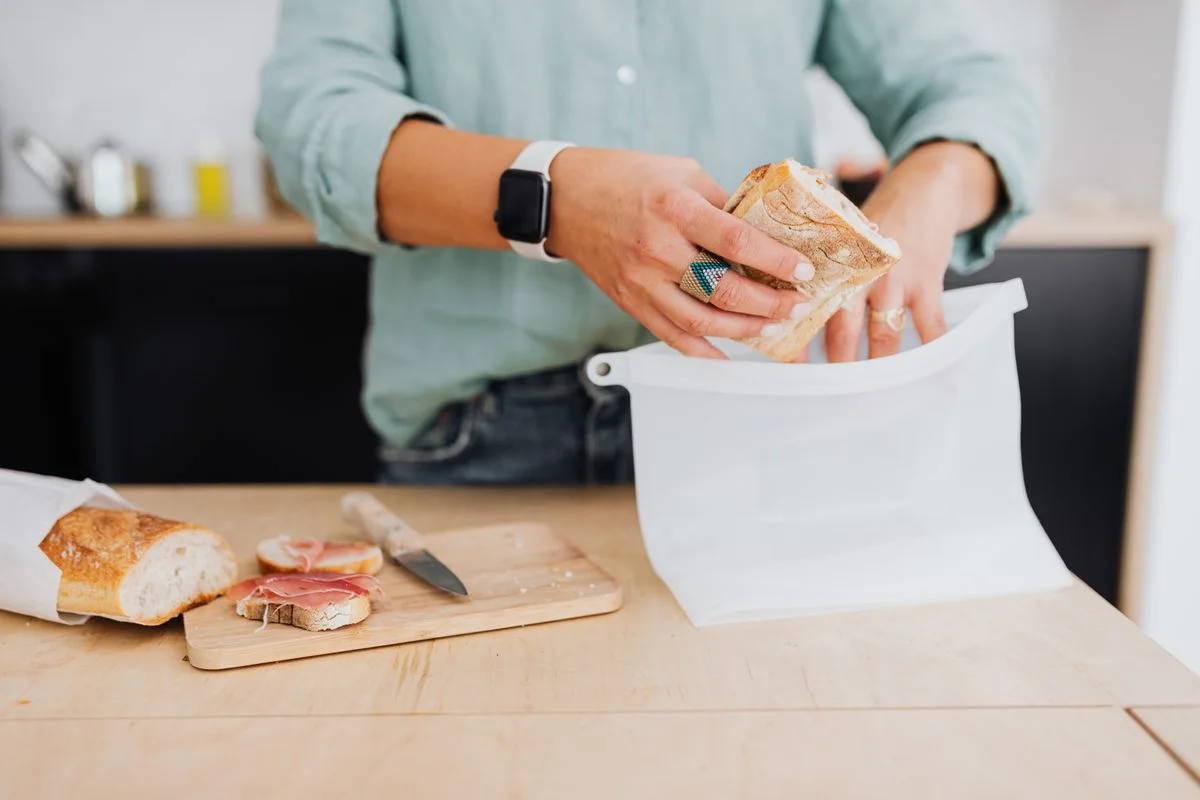
Reusable food bags are most useful when you can wash, dry, and reuse them without creating a new kitchen chore you dislike. Flexible storage can save cupboard space, but corners and seals need attention. Different bags have different materials and instructions, so a care claim from one brand should not be applied to every similar-looking product. Before buying a multipack, choose a single useful size and think through what will happen to it after an ordinary packed lunch or freezer task.
Match size and shape to the contents
A flat bag suits different foods from a bag with a wide standing base. Compare the opening with the items you will put inside, then check whether the full bag will fit the lunch bag, fridge shelf, or freezer drawer. Nominal capacity does not tell you how easily you can remove a sandwich or scoop out ingredients. A smaller selection of recurring sizes can be easier to use than a variety pack filled with shapes that rarely leave the cupboard.
Read the complete care method
Check washing, heating, and freezing permissions for the exact bag. Stasher's official guidance, for example, allows specified washing methods but advises against turning its bonded bags inside out. Other constructions may have different instructions. That is a reason to read the supplied care information, not to improvise from a generic reusable-bag tip. Avoid using a material label as a substitute for the product's limits. Any slider, valve, or removable closure may have its own care requirements.
Find a drying arrangement first
A clean bag needs a way to stay open while it dries, according to its instructions. Look at your drying rack and decide whether an existing support works before adding a dedicated accessory. The opening should be accessible enough to inspect corners and the seal. Several bags washed together occupy more drying space than their folded storage footprint suggests. If that space is limited, buying fewer bags and reusing them regularly may be more convenient than a large multipack.
Assign jobs without overpromising savings
Consider starting with a repeatable task such as carrying a dry snack or storing an appropriate ingredient. A reusable bag only replaces a disposable item when it is actually used in that role. It may not replace rigid containers for every meal, and cleaning effort is part of the comparison. Keep the manufacturer's guidance for dealing with wear or damage. If a closure becomes difficult to clean or no longer functions as intended, consult that guidance rather than assuming indefinite use.
THE USEFUL TAKEAWAY
Try reusable bags as a manageable routine before buying a large set. Choose a useful shape, follow its specific care instructions, and make room for open drying. Their practical value comes from repeated suitable use, not from the number of bags stored in a drawer.
Further information
Manufacturer and official references for the details discussed. Check instructions for the exact product you are considering.