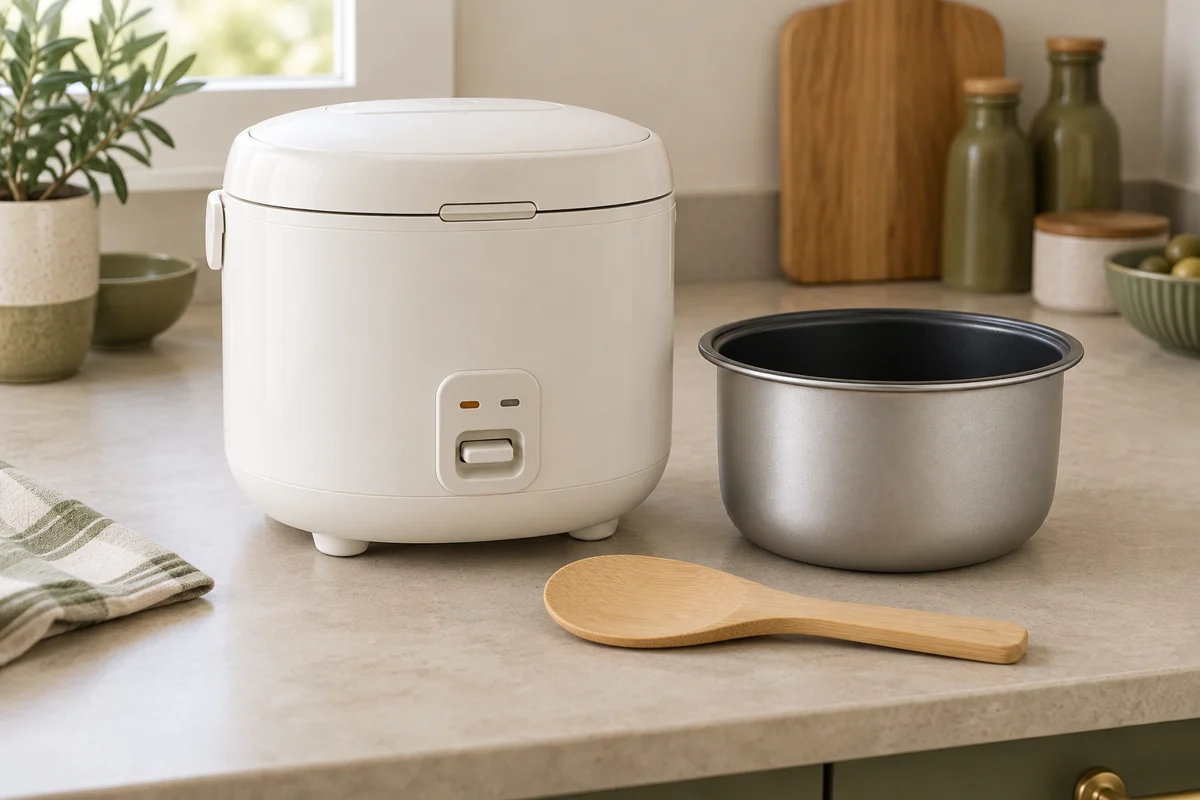
A rice cooker for a smaller household should handle your normal small batch, not simply advertise an impressive maximum. Capacity labels may refer to uncooked rice measured in the supplied cup, and permitted quantities can vary by rice type or setting. That makes the manual especially useful before purchase. Think about the portions you eat, how often you cook, and the space required to open and clean the cooker. A compact model can be sufficient when its documented range matches your routine.
Translate the cup measurement
Check what the maker means by cups and whether capacity refers to uncooked or cooked rice. Zojirushi specifies quantities using its supplied measuring cup on relevant models. Do not substitute your normal mug or another measuring system without following the instructions. Compare the stated range with the batch you normally prepare. This also helps when replacing a missing cup later: the correct reference is part of using the cooker as intended, not merely an optional accessory in the box.
Look for the smallest permitted batch
Read the minimum and maximum amounts for the rice type and cooking mode you plan to use. A setting for a particular grain can have a different range from a basic white-rice program. A larger cooker is not automatically better for a small portion. Consider whether cooking a bigger batch fits your meal routine and storage plans, rather than buying capacity on the assumption that you will always adapt your habits. Choose around your ordinary dinner before planning for visitors.
Check lid access and condensation parts
Measure the cooker with its lid open and allow the clearance the manufacturer specifies. A compact closed body may need substantial space above it. Inspect how the inner lid, steam-related components, and any collection parts are cleaned, without dismantling beyond the manual's directions. The inner pot should be manageable to remove and wash. If it has a coating, check permitted utensils and cleaners. Convenience comes from the whole cleaning routine, not just from a removable bowl.
Decide which programs matter
A timer, keep-warm mode, or specialized grain setting can be useful when it matches how you cook. Read their operating conditions and limitations instead of assuming every program suits every recipe. Check control clarity and whether settings are easy to identify. Replacement inner pots and measuring cups may matter more over time than a long list of cooking modes. Verify exact model compatibility and local availability before counting those parts as an advantage in the purchase comparison.
THE USEFUL TAKEAWAY
A small-household rice cooker should match the batch you really prepare and the units its maker specifies. Minimum quantities, lid clearance, and simple cleaning are practical priorities. Choose extra programs when they fit your meals, and check replacement parts before paying mainly for a larger maximum capacity.
Further information
Manufacturer and official references for the details discussed. Check instructions for the exact product you are considering.