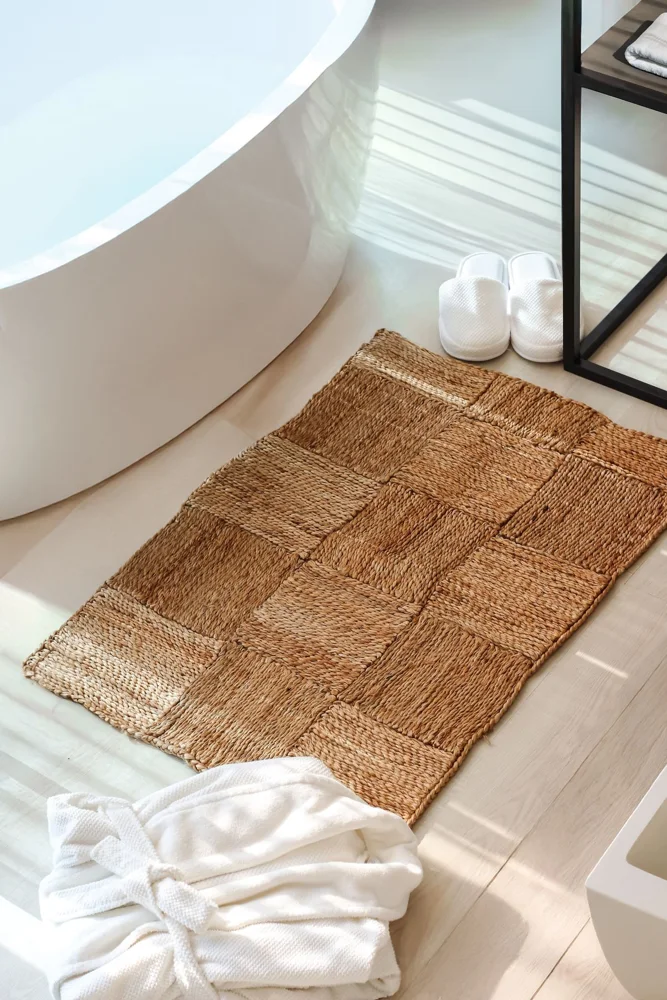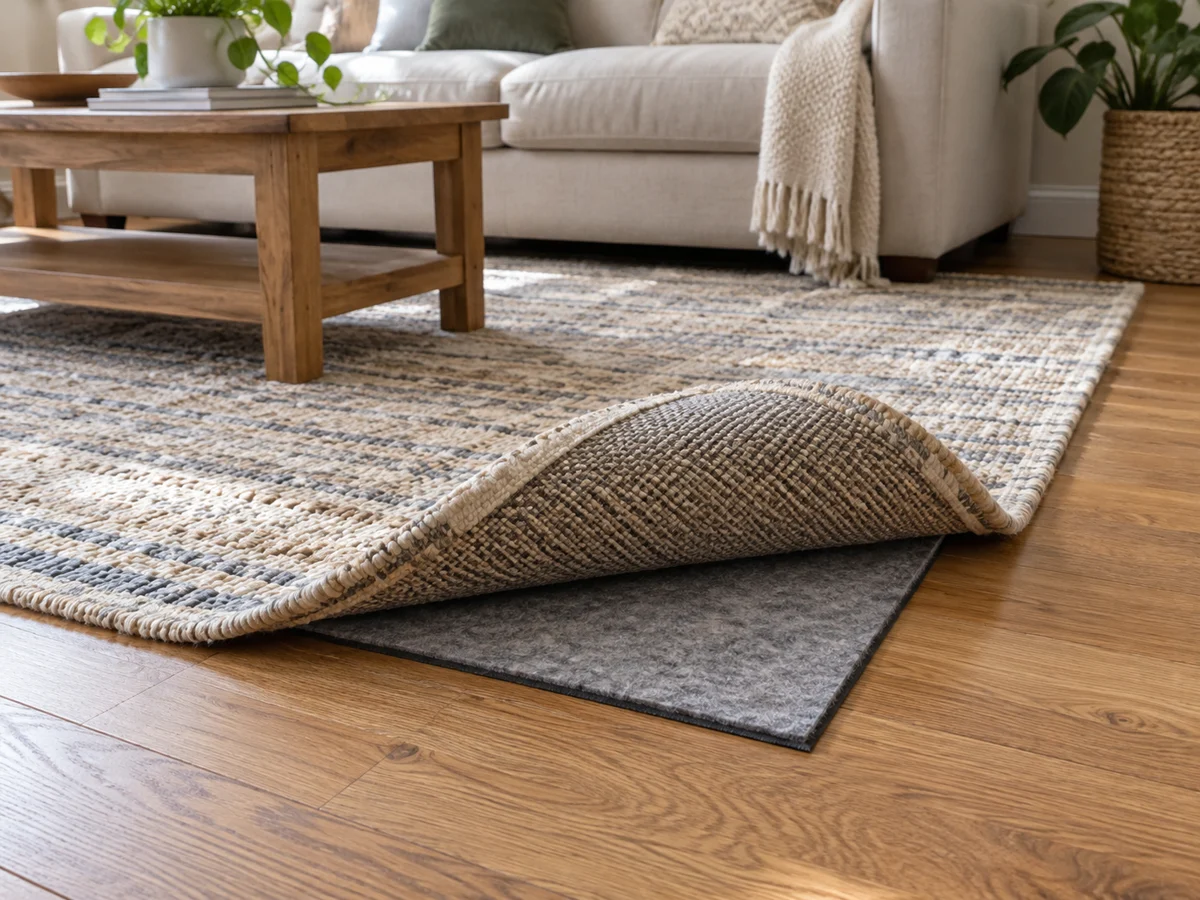
A rug pad sits out of sight, so it is easy to buy by size or thickness alone. The floor finish, rug backing, doors, and cleaning routine deserve equal attention. Different pads are made for different purposes and surfaces; a product that works in one room should not automatically be moved to another without checking. Begin with the rug and floor information you already have. Then compare the pad's exact compatibility, intended use, and dimensions before treating it as a universal accessory.
Identify the floor and rug surfaces
Check the flooring manufacturer's guidance for mats, rugs, and backing materials, especially if the finish has specific restrictions. Then read the rug and pad instructions together. Material names alone do not establish compatibility, and a generic non-slip description may not answer the relevant question. IKEA's underlay range includes different material combinations, illustrating why the exact product matters. If you cannot identify the floor finish, resolve that uncertainty before choosing a pad based only on the room's appearance.
Choose the function you need
Some pads emphasize grip, others cushioning, and some combine functions. Decide what problem you are trying to solve: a thin rug moving, a surface feeling too firm, or another issue addressed by the product's intended use. Extra thickness can change how the edge sits and how furniture rests. It is not automatically an improvement. Compare the complete arrangement with the pad maker's guidance rather than layering several products to create a result none of them explicitly supports.
Measure the edge and door clearance
Follow the product's sizing or trimming instructions so that the pad fits beneath the rug as intended. Check whether it can be cut and how the edges should be treated. Measure combined thickness at doors and other tight transitions, including any pile. A pad hidden under a rug can still change the opening of a low door or the movement of a chair. Compare the actual outline, particularly for irregular rugs, rather than ordering a nominally matching size and assuming every edge aligns.
Plan periodic cleaning and inspection
Read how the pad should be cleaned and dried, and whether it should be lifted periodically as part of the product or floor care routine. A washable rug does not imply that its pad has the same washing instructions. Consider the effort needed to move furniture and access the floor underneath. If radiant floor heating is present, check the relevant flooring, heating, rug, and pad guidance together. Do not infer suitability from a general indoor-use label when the system places specific conditions on floor coverings.
THE USEFUL TAKEAWAY
Choose a rug pad as part of a floor-and-rug system. Verify the actual surfaces, intended function, and sizing method before comparing thickness. Clear compatibility and manageable care are more valuable than a generic claim that one pad works everywhere, especially near low doors or over floor heating.
Further information
Manufacturer and official references for the details discussed. Check instructions for the exact product you are considering.