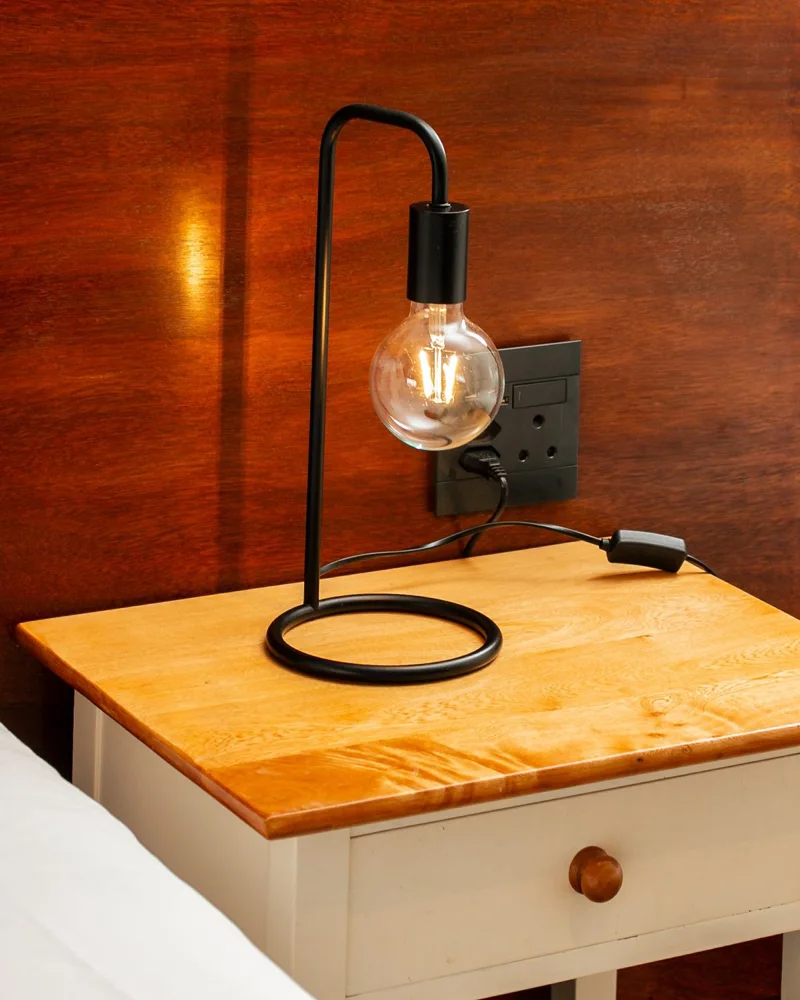
A bedside table has a small job description but works in a crowded part of the room. It needs to hold the objects used before sleep and after waking, while allowing you to get into bed and reach drawers or sockets. A compact footprint is helpful only when the top and storage remain usable. Start with mattress height, walking space, and the lamp or charger you already own. Those measurements provide a clearer guide than choosing the smallest matching table in a bedroom collection.
Check reach from the mattress
Measure the top of the mattress in its normal arrangement, including any topper, and compare it with the proposed tabletop height. Sit and lie in your usual position to assess where you reach for a glass or phone. A tall table can feel different beside a low bed, while a low one may be awkward from a deeper mattress. Use your own furniture as the reference. There is no need to force a standard height rule when the actual reach is easy to inspect.
Lay out the objects on top
Draw the proposed top on paper and place your lamp base, book, glasses case, or other regular items within it. Leave space to pick them up without brushing the lamp. A charging cable needs a path that does not trap the phone behind the table or obstruct a drawer. If a lamp is wall mounted, the tabletop may be able to shrink, but installation and cord routing become separate tasks. Count the space you truly need rather than assuming every bedside object belongs there.
Measure doors, drawers, and feet
A bedside unit may fit beside the frame while its drawer cannot open past bedding or a nearby door. Measure the movement of each part and the route into bed. Legs can make floor cleaning more accessible, but they may spread wider than the cabinet body. A wall-mounted unit preserves floor space yet requires suitable installation for its stated load. Follow the furniture's anchoring or fixing instructions and resolve wall suitability before using a floating design to solve a narrow gap.
Choose storage by frequency
An open shelf gives quick access but may expose a cluttered second layer. A drawer can contain small objects, provided its internal height and width suit them. A deep cupboard may be excessive for a few bedtime essentials. Check the finish's cleaning instructions, especially if a drink will regularly sit on top. If you move frequently, assembly and disassembly information can matter more than a decorative detail. A useful table is one you can maintain and access without reshuffling the whole bedside area.
THE USEFUL TAKEAWAY
Choose a bedside table around your actual reach and nightly essentials. Useful top area, working drawers, and access into bed matter more than a matching set. Measure the full operating arrangement, and consider a smaller piece when its simple storage already covers what needs to stay nearby.
Further information
Manufacturer and official references for the details discussed. Check instructions for the exact product you are considering.