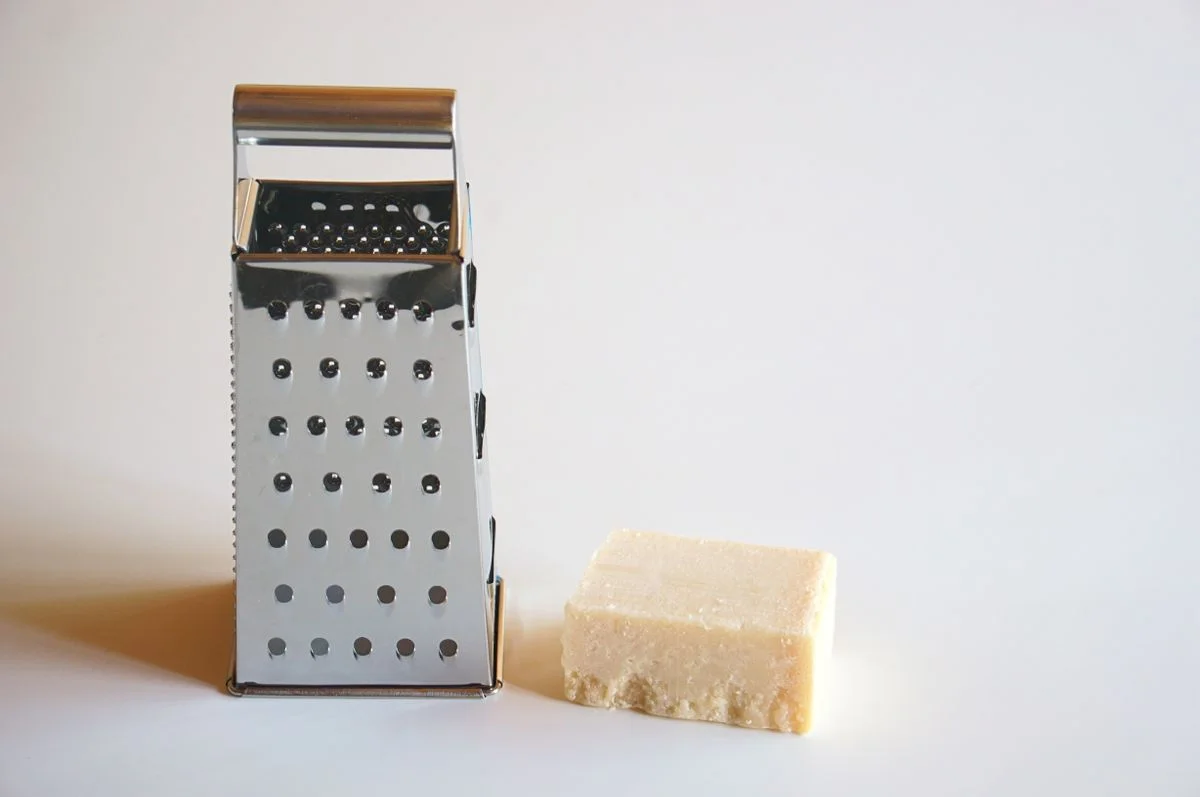
A box grater offers several surfaces in one object, while a flat grater can be easier to store or use over a bowl. The better purchase depends on what you grate and how much of it you prepare. Cheese for a family meal is a different job from a little citrus zest. Start with those tasks, then consider where the grated food lands, how the tool is held, and whether you can clean every surface comfortably afterward.
Identify the cuts you actually need
Look at the foods you grate regularly and the texture each recipe requires. A coarse surface for cheese does not replace a fine zester, even if both appear on the same box. Several faces add value only when they handle recurring tasks. For occasional garnish, a single narrow grater may occupy less space. For larger quantities, a stable box can be convenient. Compare the usable area of the relevant face rather than counting the total number of advertised functions.
Consider where the food goes
A box grater collects food within its walls, but the base opening and board arrangement determine how easily you can retrieve it. A flat model may rest over a bowl or be held above a plate; check whether that position is expressly supported by its design. If it includes a container, confirm its usable volume and how it detaches. An extra container is helpful only if it fits your normal portion and is easy to wash and store.
Check stability and hand clearance
Inspect the handle and base, and imagine the tool in the position the manufacturer recommends. A grippy edge may help on a suitable surface, but it should not require you to hold the tool at an awkward angle. Look for room between your hand and the bowl or board. Any guard should be assessed for its intended food shapes and handling instructions. Do not assume that a small bundled guard will make every ingredient or technique suitable.
Plan washing before drawer storage
Grating teeth create surfaces that deserve careful cleaning and protected storage. Check the maker's instructions, including whether a brush or dishwasher is permitted. A removable face may improve access, but it also adds fittings and parts. Flat graters need a cover or another appropriate way to keep their teeth away from loose tools. Box graters need cupboard height and a place to drain after washing. Choose the arrangement that you can maintain without leaving the tool on the counter indefinitely.
THE USEFUL TAKEAWAY
Buy a grater around the surfaces you will use, not the number of faces on its packaging. A box can suit repeated larger portions, while a flat tool may suit garnish and tight storage. Stability, food collection, and cleanup determine which design earns a permanent place.
Further information
Manufacturer and official references for the details discussed. Check instructions for the exact product you are considering.