The useful capacity of a cleaning bucket is the amount you can carry and pour comfortably, not the largest number stamped inside it. A full bucket can be awkward on stairs or in a small bathroom, and emptying often reveals weaknesses that a product photo hides. Begin with the sink, drain or other appropriate place where you will fill and empty it. Then consider the mop, storage cupboard and route through the home as parts of the same purchase decision, including any doors you must open.
Match the opening to your tools
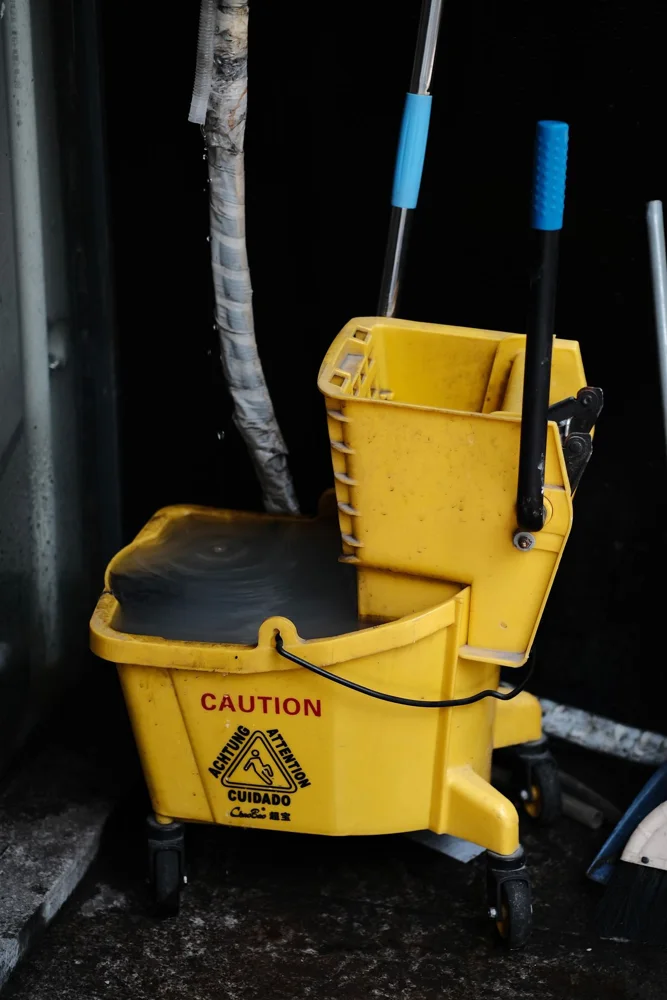
Check the mop head against the bucket's usable opening, especially when a wringer or divider narrows it. A rectangular flat head may fit poorly in a small round bucket even when the stated volume sounds generous. If washing cloths in it, look for enough room to work without catching your hand on internal fittings. Measure the exterior as well, since handles and protruding wringers can prevent a bucket from fitting under a sink.
Consider filling and lifting together
A tall bucket may not fit beneath a short tap. Check clearance in the sink you intend to use, or confirm the fill method does not require an awkward tilt. Inspect the handle shape and the points where it meets the body. A comfortable handle should remain easy to hold when wet. You need not fill a bucket to its maximum line for every task; choose a sensible working amount and test that lift before buying a larger size.
Look closely at pouring control
A defined spout and second grip can make controlled emptying easier, but their usefulness depends on where you pour. Imagine raising the bucket over your sink edge and rotating it through the final part of the pour. Check whether the handle stays out of the liquid path. A flexible body may change shape under load, so inspect the manufacturer's intended use and construction rather than judging robustness solely by thick-looking plastic in a photograph.
Keep cleanup uncomplicated
Removable wringers and smooth interiors are easier to inspect for trapped debris. Check whether each part comes apart without force and whether you can dry the bucket before storage. Measurement marks help when a product requires dilution, but use the cleaner's directions and proper units. A bucket can also carry dry tools, provided that storage role does not leave residues or loose objects inside when it is next used for cleaning water.
THE USEFUL TAKEAWAY
Buy the bucket around filling, carrying and emptying, rather than maximum volume. A smaller model with a comfortable grip and controlled pour may suit everyday cleaning better than a larger one. Check tool fit and storage dimensions so the practical parts of the job remain easy to repeat each time.
Further information
Manufacturer and official references for the details discussed. Check instructions for the exact product you are considering.