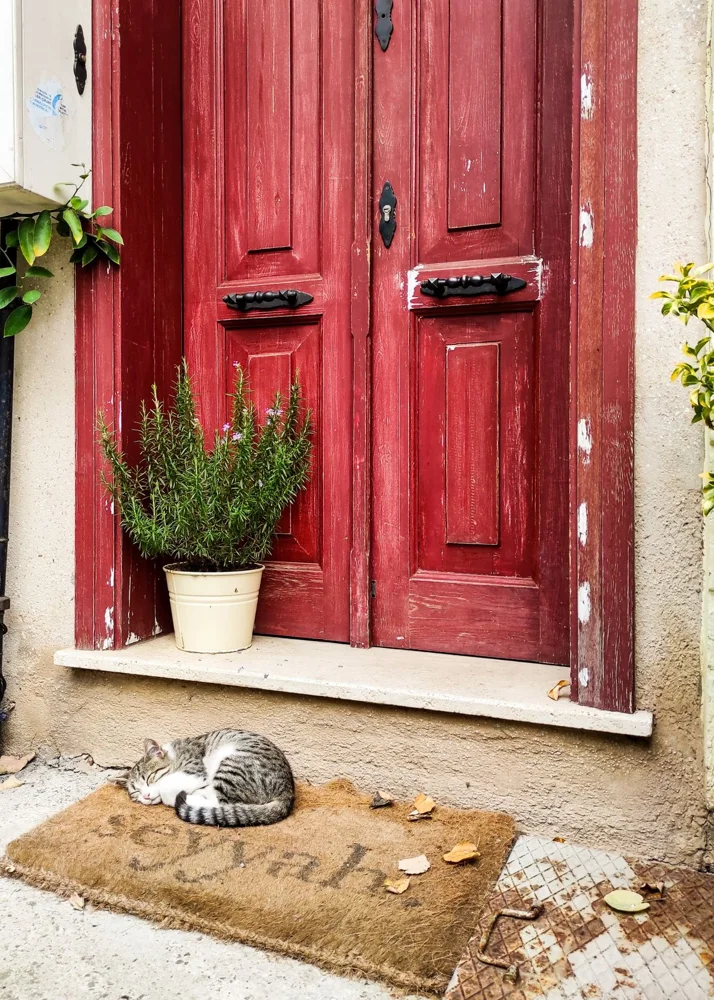
A door mat for a wet entrance has to fit the space, accept the traffic and dry between cleaning or wet days. A thick absorbent surface can be useful, but thickness may interfere with a door, and backing materials may have restrictions on particular floor finishes. Start by measuring the entrance and identifying the floor underneath. The best choice is not simply the largest or softest mat: it is one that sits properly, can be maintained as directed and does not turn a compact doorway into an awkward obstacle.
Measure the door's full movement
Check the gap below the door at several points along its swing, including any weather strip. Compare that space with the mat's total thickness and any raised border. Also measure how much floor remains for opening a cupboard or setting down a bag. A mat pushed into a corner to avoid the door may no longer sit where shoes land. Mark the proposed footprint before ordering and consider the approach from both inside and outside.
Check backing and floor compatibility
Read the mat maker's surface guidance and the flooring manufacturer's care information. A non-slip claim does not establish that a particular backing is appropriate for every wood, vinyl or stone finish. If a separate underlay is required, include its thickness and compatibility in the calculation. Inspect instructions for moisture beneath the mat and for moving it during cleaning. Do not assume a waterproof-looking backing removes the need to check and dry the floor below.
Choose absorbency around real traffic
Think about whether the entrance receives a few damp shoes or repeated wet foot traffic. Look at the surface material and cleaning instructions rather than an unsupported promise to hold a certain amount of water. A mat that can be cleaned in your washer is useful only if its size, weight and care label fit that machine. For busy entrances, a second suitable mat may help maintain a dry rotation without buying one oversized item that is difficult to handle.
Plan cleaning and full drying
Check whether washing, brushing or another method is recommended, and follow the limits for the backing as well as the pile. Provide enough drying space before choosing a thick mat for a small home. Remove loose grit as directed so it does not accumulate in the surface. Inspect curled edges or worn backing and deal with those problems rather than hiding them under furniture. Keep the entrance clear enough that the mat lies in its intended position throughout use.
THE USEFUL TAKEAWAY
A wet-entrance mat earns its place through fit, suitable backing and manageable care. Choose around door clearance and the traffic you actually receive, then plan how it will dry. Absorbency is useful when the whole arrangement remains practical, including the condition of the floor beneath the mat.
Further information
Manufacturer and official references for the details discussed. Check instructions for the exact product you are considering.