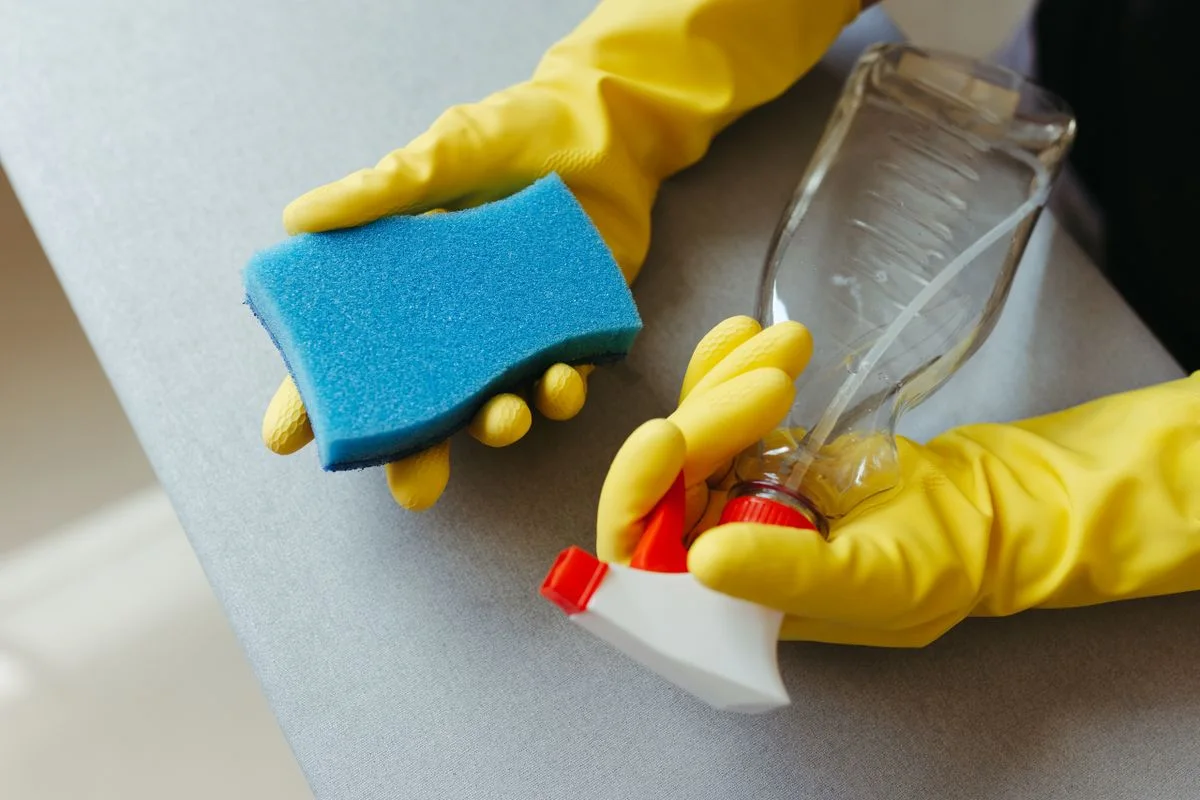
Reusable cleaning gloves should let you hold a wet dish, operate a spray trigger and remove the gloves without a struggle. A pair that looks sturdy can still be too loose at the fingertips or too tight across the palm. Begin with the work you intend to do and the products involved. Household gloves vary in material and stated chemical suitability, so neither thickness nor a familiar color establishes protection. Fit, clear product instructions and a place to dry the gloves are the practical starting points.
Read material and use limits
Check the glove maker's stated uses and the cleaner's label before combining them. General household gloves should not be assumed suitable for every chemical, sharp object or hot surface. If a product calls for a specific glove material or protection standard, follow that requirement. Look at the material information as well as any lining, especially if you know you react to a particular material. A purchase decision should rest on the actual product details rather than a broad claim such as heavy duty.
Measure for working movement
Use the maker's sizing guide and measure at the points it specifies. Leave enough movement to curl your fingers and close your hand around a handle. Excess length at the tips can make small controls difficult, while a tight palm can make removal frustrating. Consider whether a lining changes the internal fit. If you can try a pair, mimic your usual tasks rather than judging fit with a flat open hand alone.
Check cuffs and grip together
Long cuffs may be useful for some wet tasks but can catch on clothing or fold down during use. Shorter cuffs may be easier to store. Look at the grip pattern where your fingers and palm meet a wet object, and consider whether deep texture will be awkward to clean. Keep any water or chemical limits in mind; cuff length does not establish suitability for immersion. Choose the design that supports your actual task within the maker's stated conditions.
Make drying and replacement possible
Read the care guidance for both the outer material and any lining. Find a place where gloves can dry as directed without being folded into a damp bundle. Keep separate pairs for distinct jobs where that improves organization. Inspect for damage before use and replace a compromised pair according to its instructions. A large pack is only economical if the fit is right and the unused pairs can be stored within the recommended conditions.
THE USEFUL TAKEAWAY
Good household gloves balance fit with clearly stated use limits. Choose the material for the product and task, then assess movement, cuffs and grip. A pair that you can clean, dry and inspect easily is more useful than an oversized bundle chosen only for thickness or an assumed level of protection.
Further information
Manufacturer and official references for the details discussed. Check instructions for the exact product you are considering.