A mop is only part of a floor cleaning system. The floor finish, cleaning product, amount of moisture and pad all need to work together. Begin by identifying your flooring as precisely as possible: sealed wood, laminate, vinyl and tile are not interchangeable care categories. If you rent, ask for floor information or existing care instructions before experimenting. This preparation can prevent buying a convenient-looking mop that calls for a method your floor manufacturer does not permit, or a cleaner intended for a different finish.
Start with the flooring instructions
Find the care guidance for the actual floor product or finish. A label that says suitable for hard floors is too broad to settle every case. Check permitted cleaners and any moisture or heat restrictions. Bona's wood floor guidance emphasizes removing loose dirt first and using appropriate tools and cleaners. Treat brand advice as specific to its intended surfaces, and avoid extending one product's suitability to unfinished wood, specialty coatings or an unidentified floor.
Choose how moisture is controlled
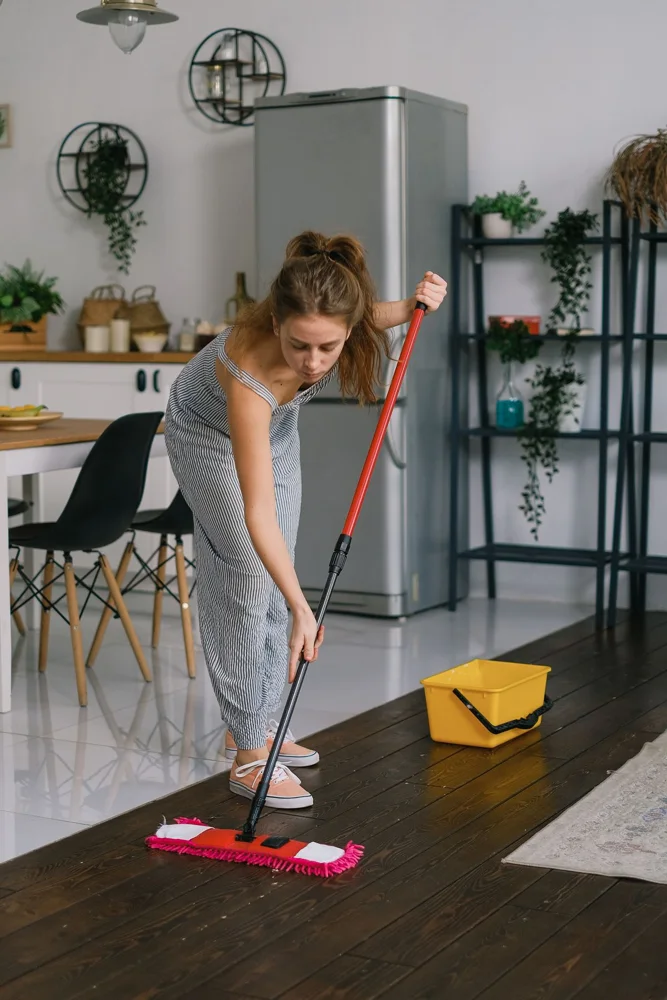
A flat pad, spray system and string mop offer different handling. Compare how you will apply liquid, wring the mop and avoid drips while moving between rooms. A small spot-cleaning routine may favor a spray bottle and washable pad. A larger tiled utility area may make a bucket more practical. Base the choice on the permitted cleaning method and your room layout, rather than assuming a heavier mop must deliver a deeper clean.
Measure the head in awkward spaces
Check the distance between kitchen cabinet legs, the space beside the toilet and the gap under movable furniture. A broad head can cover an open room quickly but need a second tool around obstacles. Look at the swivel joint and how the head behaves when pulled backwards. Handle height should let you work without repeatedly changing your stance. If storage is tight, check the full folded length and whether the damp pad can be removed before hanging it away.
Plan enough pads for the routine
Washable pads still require laundering and drying. Work out whether you need a clean pad for separate areas and one spare while the other dries. Compare replacement pad dimensions and attachment style; similar looking pads may not fit the same head securely. Check the pad's care label, since washing instructions vary. A small set that suits your cleaning frequency is often more useful than a large cheap bundle with unclear compatibility.
THE USEFUL TAKEAWAY
Choose the cleaning method first and the mop second. A suitable tool should help you control moisture, reach the room layout and keep clean pads available. Follow the floor maker's care guidance when it is more specific than a broad claim on a mop or cleaning product you are considering.
Further information
Manufacturer and official references for the details discussed. Check instructions for the exact product you are considering.