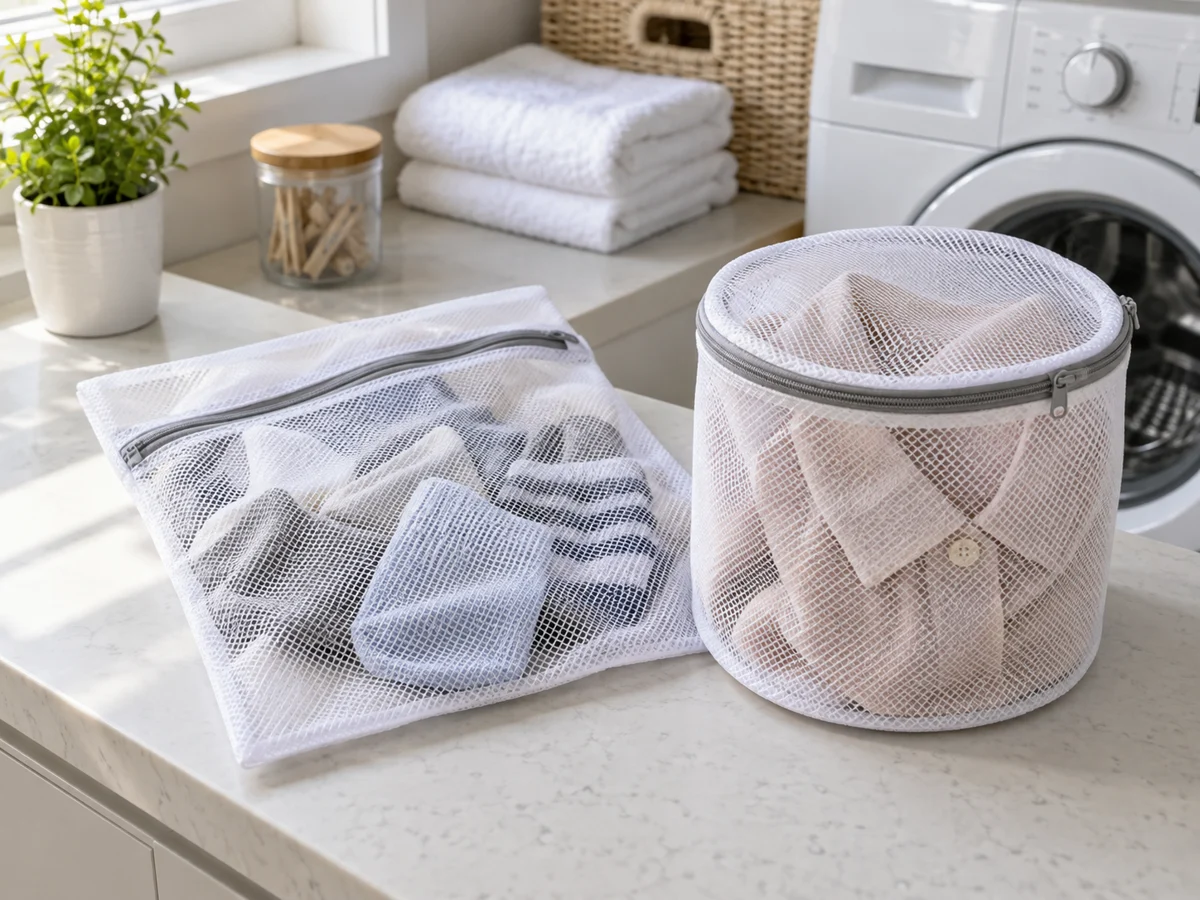
Laundry mesh bags can keep small items together and separate suitable delicate pieces, but they do not replace a garment's care instructions. The useful choice depends on the item, the bag's construction and how it moves in your washer. A giant mixed pack may include shapes you never use, while one carefully chosen size can solve a recurring problem such as missing socks. Begin with the items you want to contain, check their permitted washing method and compare bags that leave enough room for those items to move.
Match the shape to the item
Measure the item without compressing it tightly. A flat rectangular bag can suit some small garments, while a structured bag may serve a different stated purpose. Check the maker's guidance for load size and intended contents. Putting too much inside defeats the usefulness of having a separate bag. If several items need different wash conditions, they still belong in appropriate separate loads; enclosing them together does not make incompatible care labels agree.
Inspect the closure closely
Look for a zip, cord or other closure that stays secured according to the product instructions. A zip cover can keep the pull from sitting openly against other laundry, but check that it is easy to use with damp hands. Inspect seams and mesh around the closure for rough edges or weak-looking gaps. A bag used frequently should be straightforward to turn out and check. Avoid choosing solely by mesh density without considering whether the closure is suitable for the washer and task.
Read washing and drying limits
The bag's care label may have different drying or heat limits from the clothes inside. Follow both sets of instructions. Remove the items when directed rather than assuming the whole bag can go into a dryer. Tide's laundry guidance emphasizes garment labels and appropriate loading, which remain relevant when mesh bags are used. Check that the washer manual allows the intended use and that bagged items do not lead you to overfill the drum during a busy laundry day.
Organize a small working set
Choose enough bags for one realistic load and one spare if that makes the routine easier. Distinct sizes or simple tags can help household members identify what belongs where. Store dry bags where laundry is sorted, and provide a place for used bags to dry after washing. Inspect the zip and seams before reusing them. A mesh bag that has begun to open during the cycle is no longer solving the original containment problem, even if most of its fabric remains intact.
THE USEFUL TAKEAWAY
Mesh bags work best as a small organized part of a suitable laundry routine. Select the right size and closure for the intended items, avoid overfilling and follow both garment and bag care labels. Buying a few useful shapes is usually easier to manage than a large collection of near-duplicates.
Further information
Manufacturer and official references for the details discussed. Check instructions for the exact product you are considering.