A working notebook should fit the space where it is opened and the way notes are retrieved later. Cover color and page count are easy to compare, but binding, ruling, paper, and page numbering determine much of the daily experience. Before buying another attractive notebook, look through the one currently in use. Notice whether pages are skipped, notes are hard to find, or the book occupies too much desk space. Those observations make a useful buying brief.
Measure the notebook while it is open
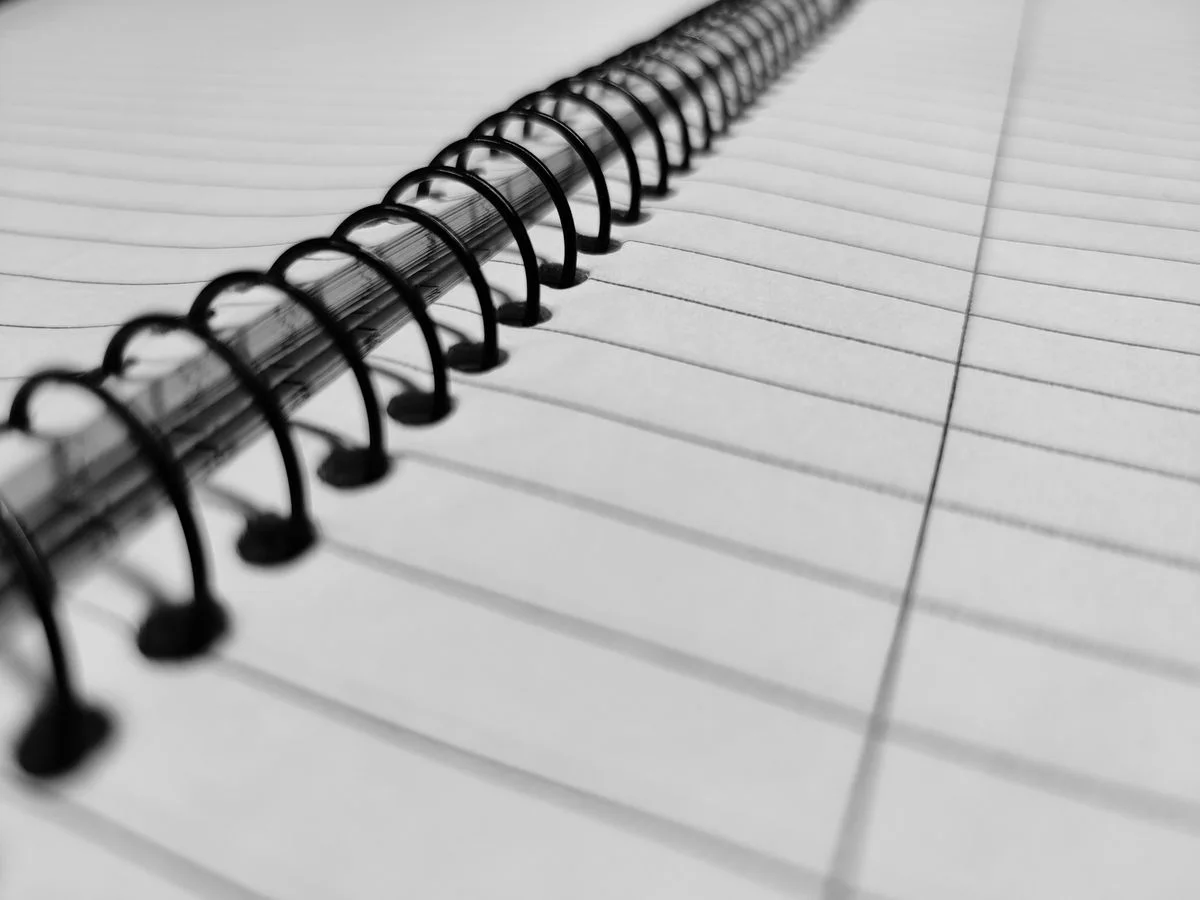
A notebook that fits a bag can still compete with a keyboard when opened flat. Place a folded sheet on the desk to model the proposed size and decide where your writing hand will rest. A spiral binding allows some books to fold back, while a sewn or glued binding creates a different writing surface near the center. Check whether the cover can support occasional notes away from a desk. A hard cover adds structure, but also weight and thickness during a commute.
Select a page layout for the actual notes
Ruled pages suit continuous writing, grids help align figures and diagrams, and dotted or blank pages offer more freedom. None is universally more productive. Compare the spacing with your handwriting and the information you record. If meeting notes must be located quickly, numbered pages and a few index pages may be useful. A date box does little for an undated project sketchbook. Avoid buying a highly structured planner when most of its printed sections will remain empty.
Consider the pen and paper together
Paper weight is useful information but does not answer every question about ink behavior. Moleskine's own FAQ notes that its paper varies by range and directs buyers to the product information. Check the actual notebook instead of assuming a whole brand uses one paper. If possible, test the pen you normally use on a sample sheet. Look at the reverse after the ink dries. Using both sides comfortably can matter more to usable capacity than a large headline page count.
Choose features that help retrieval
A ribbon marker can identify the current page; a pocket can hold a few loose notes; an elastic closure can stop the book opening in a bag. Those features should support a routine rather than substitute for one. Decide how completed notebooks will be labelled and stored before buying several. An inexpensive consistent format can simplify a shelf of project records. If only a few pages are needed each week, a thinner book may be easier to finish and consult than a thick premium volume.
THE USEFUL TAKEAWAY
Choose a notebook around open desk space, writing tools, and future retrieval. A suitable binding and page layout can make an inexpensive book more useful than a premium one with unnecessary features. Buy a format you can finish, label, and find again, rather than stocking several systems at once.
Further information
Manufacturer and official references for the details discussed. Check instructions for the exact product you are considering.