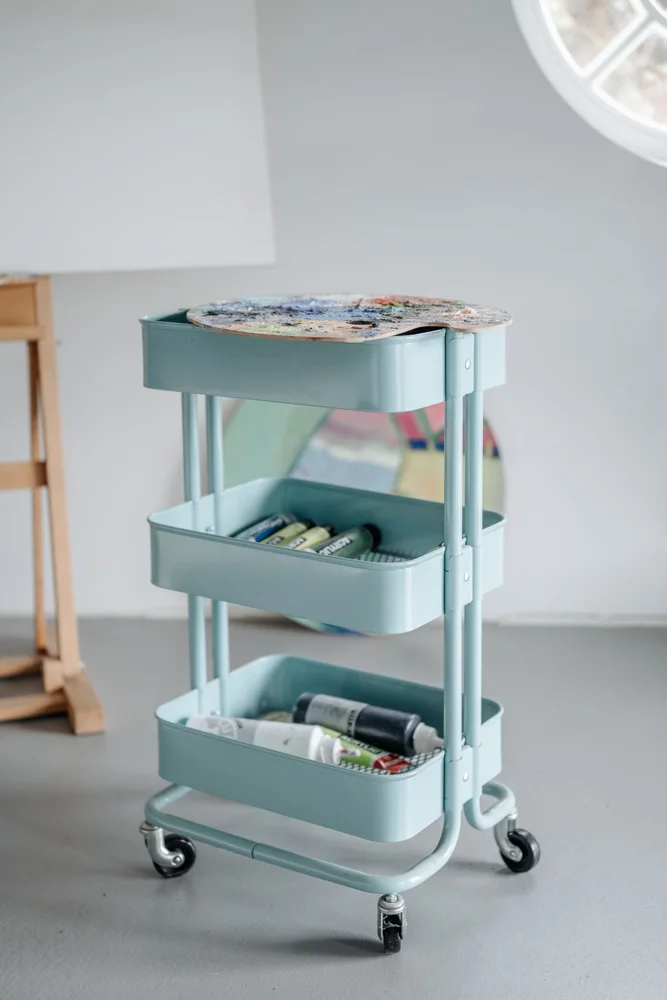
A rolling cart can bring storage to a temporary workspace or fit an unused corner, but flexibility depends on more than having wheels. The loaded cart must pass through the route you intend, and its shelves must accept the objects you want to move. Start by choosing a primary job rather than treating the cart as a place for miscellaneous overflow. Measure the footprint, shelf openings, and turning space, then check load guidance and wheel operation before relying on it as mobile storage.
Measure the loaded route
Check the narrowest doorway, the turn beside furniture, and the space where the cart will stand. Include handles and any objects extending beyond the trays. A cart that fits its parking gap may be hard to pull out if there is no room for your hand. Wheels also need a surface suitable for the product's intended use; thresholds or rugs can change the route. Mark the full footprint and consider the normal path while the shelves contain their actual load.
Compare shelf dimensions and openings
A cart's overall width includes its frame, so look for usable tray dimensions and the clearance between levels. Tall bottles or folders can fit a shelf floor yet fail beneath the tray above. A raised rim helps contain some objects but can interfere with sliding out a box. Decide which items will occupy each level before choosing a configuration. A three-tier cart may be less useful than a simpler arrangement if the main objects need a larger uninterrupted space.
Read loads and wheel instructions
Check whether capacity is stated per shelf, for the whole cart, or both, and follow the maker's distribution guidance. IKEA's RÅSKOG information provides a per-shelf figure, illustrating why the unit of the limit matters. Do not add or reinterpret numbers beyond the documented arrangement. Inspect how wheel locks operate and what the instructions say about using and moving the cart. A storage cart is not automatically a suitable support for an operating appliance simply because the appliance fits on top.
Keep the storage job adaptable
Removable boxes or shallow trays can organize small objects while allowing the cart's role to change later. Compare their outside dimensions with the usable shelf, including space to lift them. Read care guidance for the finish and wheels, and check whether intended use includes the environment you have in mind. A kitchen, bathroom, and outdoor area present different conditions. If the cart will remain parked most of the time, compare a simple fixed shelf too; mobility should solve a real need rather than just add hardware.
THE USEFUL TAKEAWAY
Choose a rolling cart for a defined job and a route it can genuinely travel. Usable shelves, clear openings, and documented load limits matter more than tier count. Verify wheel operation and intended environment, then keep contents organized so that mobility remains useful instead of turning the cart into crowded overflow.
Further information
Manufacturer and official references for the details discussed. Check instructions for the exact product you are considering.