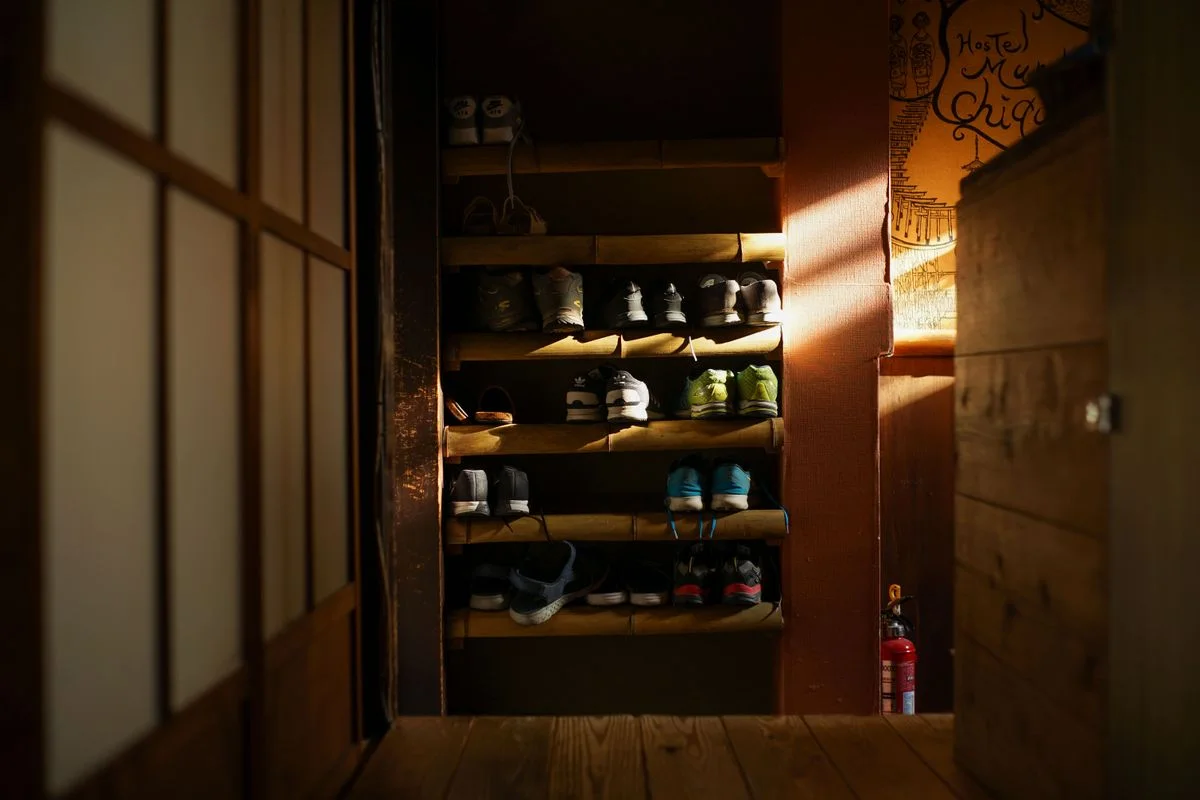
A shoe rack in a narrow entryway has to leave room for people, door swings, and the shoes themselves. A compact frame can still project into the route once larger footwear is placed on it. Begin with the pairs that live near the door and the available depth, rather than a claim about how many pairs a rack holds. Useful storage keeps daily footwear easy to retrieve without turning the entrance into another place that requires constant rearranging.
Measure with shoes in place
Use the longest pair you expect to store as a depth reference. Check whether toes or heels will extend beyond an angled or open shelf, and include that projection in the floor footprint. Measure the entrance with the door fully open and with nearby cupboard doors moving. A rack that fits the wall may still obstruct a normal route. Mark the loaded footprint on the floor before buying, particularly when the product photographs show only small or neatly aligned shoes.
Count usable shelves by footwear type
A stated pair count assumes some combination of shoe size and arrangement. Boots, trainers, and low shoes need different vertical space. Compare the gap between shelves with your actual footwear rather than assuming every level is equally useful. Adjustable shelves can help, but check what happens to capacity when one is removed. If boots are seasonal, a separate place for them may preserve a compact everyday rack rather than forcing all footwear into one oversized unit.
Check the shelf surface and maintenance
Solid trays, bars, and mesh offer different support and cleaning arrangements. Look at whether narrow heels or small shoes will sit as intended. A removable tray can be useful for collecting ordinary dirt, but it needs a place to be washed and dried. Read material care instructions, particularly for finishes used near wet footwear. Do not assume an entryway product is designed for outdoor exposure. Choose a surface you can maintain without moving a heavy assembly every time the floor needs cleaning.
Keep the entrance collection limited
A rack works more easily when it holds the shoes used regularly at the door rather than the whole household collection. Decide which pairs can live elsewhere. If the design stacks, follow the maker's stated configuration and stability instructions; do not infer unlimited height from the shape of the legs. IKEA's GREJIG specifications provide an example of a compact rack with explicit dimensions. Compare those details across products while leaving room to grasp and return a pair without disturbing the rest.
THE USEFUL TAKEAWAY
Choose an entryway shoe rack by loaded footprint and the footwear used near the door. Pair counts can hide differences in size and shelf spacing. Keep the daily collection limited, check permitted stacking, and choose surfaces that are straightforward to clean in a busy entrance.
Further information
Manufacturer and official references for the details discussed. Check instructions for the exact product you are considering.