Batch cooking changes the demands placed on a pot. You need enough room to stir, a way to handle the finished contents, and a washing space that can accommodate the vessel afterward. A stockpot's advertised capacity addresses only one of those needs. Before buying, work backward from the number of portions you intend to store, then check whether the pot, burner, sink, and storage containers form a workable routine in the kitchen you already have.
Calculate the batch you will store
Use your normal portion container as a reference rather than guessing from a pot's photograph. Count the portions planned for the fridge or freezer and compare the total with the pot's capacity, allowing working space above the ingredients. Storage is often the limiting step: there is little benefit in cooking a larger batch than your containers and available shelves can hold. A smaller repeatable batch may be more convenient than a large project that overwhelms the cleanup area.
Compare height with reach
A tall pot provides volume on a relatively compact base, but you must be able to see and stir its contents comfortably. Put an existing object of similar height on the unheated hob to assess reach. Also check clearance beneath any overhead cabinet or hood. A broad pot may be easier to stir, yet it can crowd neighboring burners. The decision should follow your stove layout and the utensils you will use, including whether a ladle reaches the bottom.
Plan for moving the contents
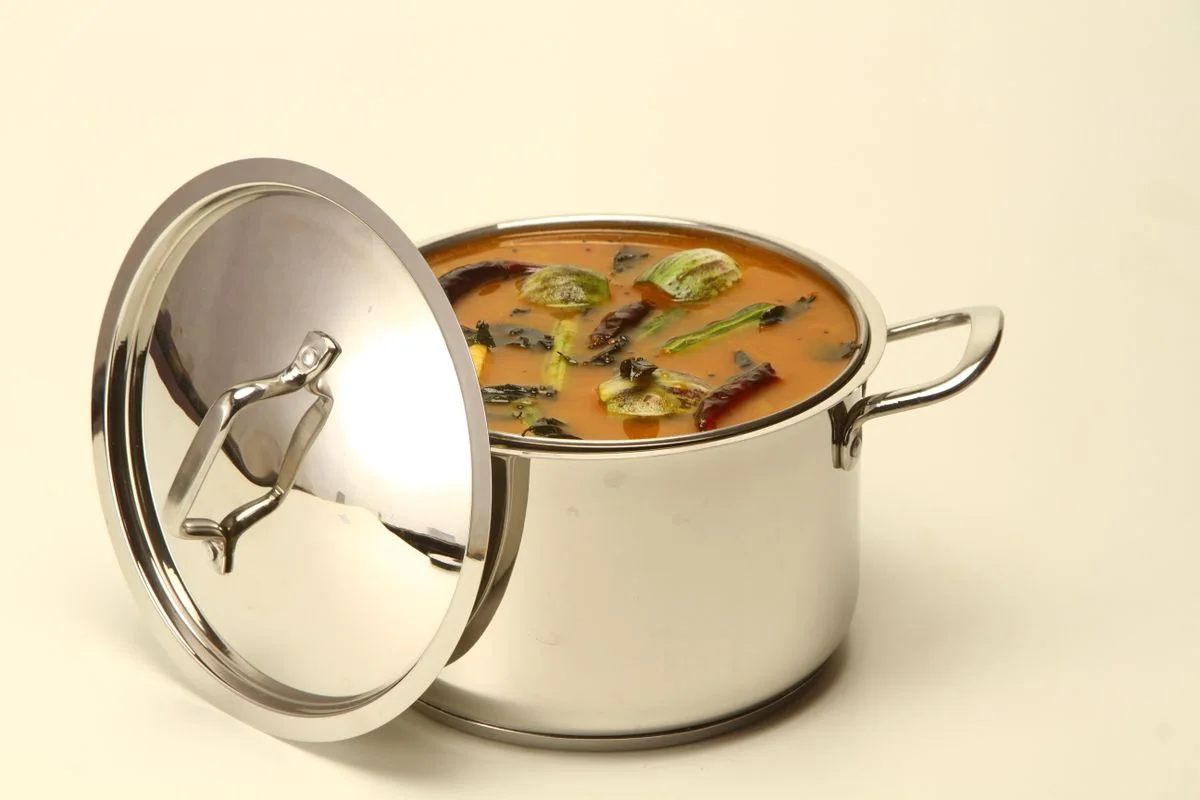
Two substantial handles deserve close inspection, including the space for gloves and the total width they add. Consider whether you normally carry a full pot or transfer portions while it remains on a suitable stable surface. A vessel that is manageable empty may be awkward when loaded. Avoid relying on a pouring rim alone to solve that problem. If the pot needs a separate colander or strainer for your recipes, include its size and storage in the comparison.
Check the less glamorous fit
Measure the sink opening and tap clearance, then consider how the stockpot will be rotated and rinsed. A pot that fits only on its side may make washing more cumbersome. Its cupboard position matters too, particularly if it must sit under several other heavy items. Read the maker's hob compatibility and cleaning guidance for the exact construction. If batch cooking is occasional, borrowing a larger pot can help establish which dimensions actually improve your routine before purchasing one.
THE USEFUL TAKEAWAY
A stockpot is useful when the whole batch-cooking routine fits together. Match it to the portions you can store, the height you can stir comfortably, and the sink where it will be cleaned. Additional capacity is valuable only when those practical limits allow you to use it.
Further information
Manufacturer and official references for the details discussed. Check instructions for the exact product you are considering.