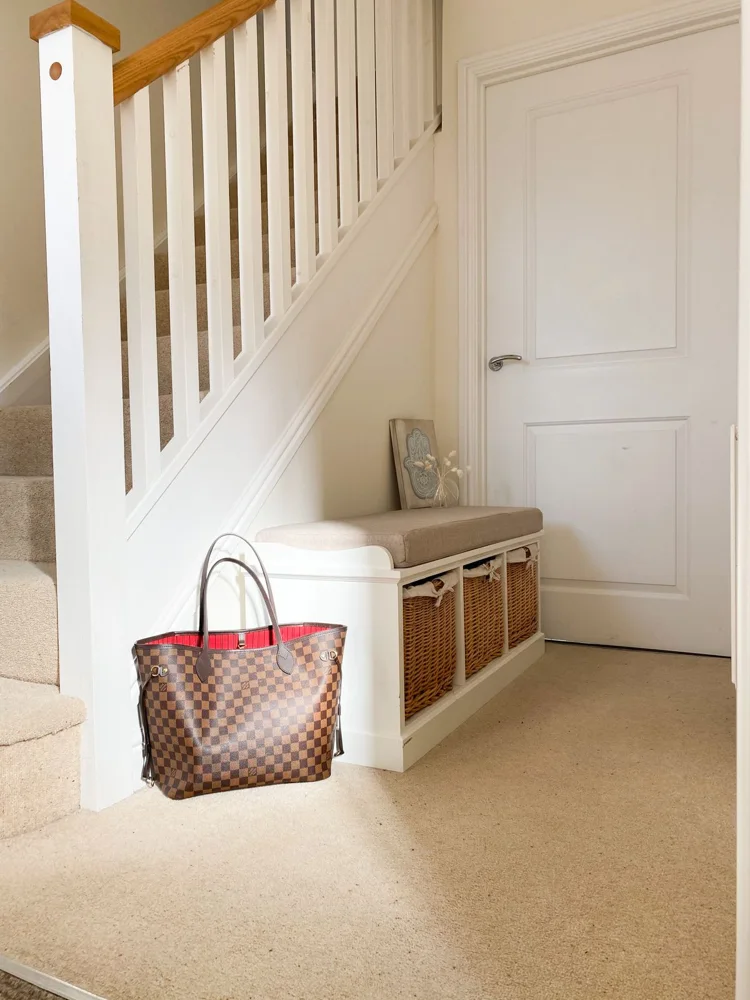
A storage bench combines a seat with a container, but both jobs need to work in the place you intend to use it. A generous outside size can hide a narrow opening or a shallow interior, while a comfortable seat may require moving cushions every time you retrieve something. Start with the objects to be stored and the space available for sitting. Then compare the lid motion, stated use, and cleaning routine rather than judging the bench only by its appearance.
Compare the interior with the contents
Measure the folded blankets, bags, or other items you plan to store. Look for usable internal dimensions and the opening size; an object may fit the cavity but not pass easily through the lid. Structural rails and upholstery can reduce the apparent space. A bench designed for shoes needs a different arrangement from one holding spare bedding. If internal measurements are missing, ask the maker. Estimating from the outside footprint can lead to an expensive piece that solves less storage than expected.
Check the seating job separately
Read whether the product is intended as seating and any stated load or use limits. Storage boxes and benches should not be treated as interchangeable because they have flat lids. Compare seat height and depth with the people who will use it and the task, such as putting on shoes. A deep cushioned seat may feel different from a firm entryway perch. If possible, assess a display model, while following the shop's instructions rather than relying on a photograph of someone seated.
Allow the lid to operate
A hinged lid needs clearance behind and above, while a removable lid needs a place to rest. Check how the lid is supported and follow its operating guidance. If the bench sits under coat hooks, hanging garments can obstruct access. Cushions or decorative objects on top may make frequent retrieval inconvenient. Measure the bench in its working arrangement, including the space needed to stand or kneel in front. A small cavity that opens easily may be more useful than a large one behind several obstacles.
Consider surfaces and the delivery route
Entryway dirt, living-room textiles, and bedroom storage place different demands on the finish. Read whether covers are removable, which cleaning methods are permitted, and how the inside should be maintained. Rattan, upholstered, and smooth rigid benches are not equivalent care choices. Check assembled dimensions against doorways and turns, and distinguish package size from finished size. If assembly is required, allow the working space and tools described by the maker. A useful bench must reach its intended location as well as fit there.
THE USEFUL TAKEAWAY
Choose a storage bench only when its seating and storage roles both suit the room. Check the interior, opening, and lid movement rather than relying on exterior size. A comfortable seat with accessible contents can earn its footprint; a decorative lid that is always covered may offer little practical storage.
Further information
Manufacturer and official references for the details discussed. Check instructions for the exact product you are considering.