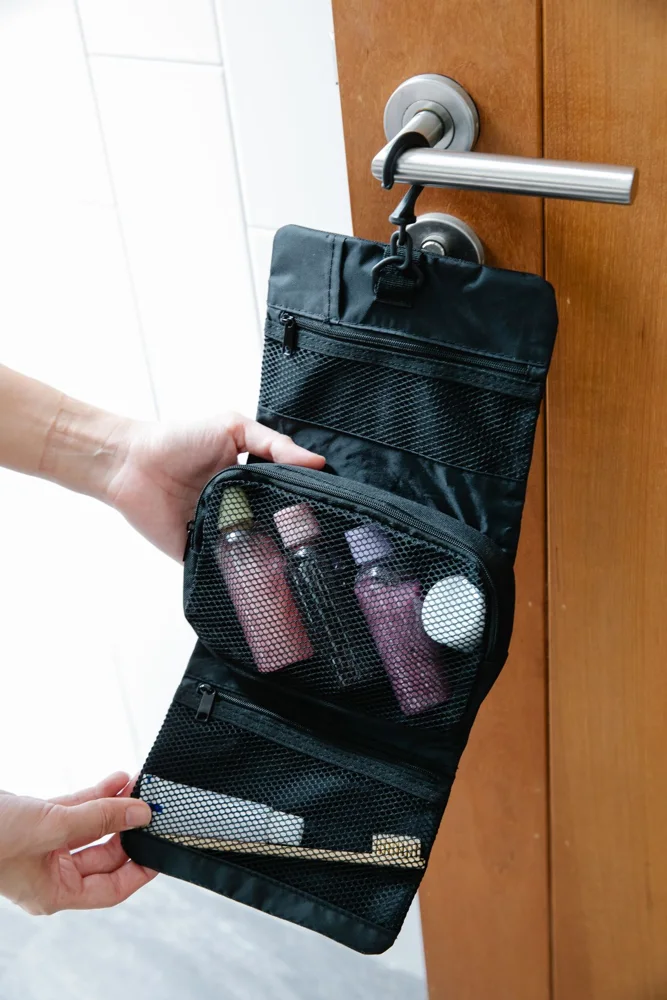
A toiletry bag needs to work in two places: inside luggage and beside the sink at your destination. A large hanging organizer may hold everything neatly but be difficult to dry or fit in a small travel bag. Begin with the toiletries you actually take, including their container dimensions. Then compare opening, lining and cleaning instructions. A compact bag with accessible corners can be more practical than numerous compartments that hold damp items out of sight and make unpacking or checking for leaks unnecessarily complicated.
Pack the ordinary toiletry set
Lay out your actual bottles, toothbrush case and other items before choosing the bag. Include the shapes used on short trips rather than full-size products you will not carry. Check internal dimensions and whether rigid containers can stand or lie as needed. A bag that looks large in a photograph may have a narrow opening or pockets that divide the space inefficiently. Keep liquid-container and airport screening requirements separate from the bag's capacity or marketing name.
Choose hanging or countertop access
A hanging bag can be convenient where counter space is limited, but inspect the hook, orientation and space needed when open. Not every bathroom has a suitable hanging point. A countertop bag should sit predictably and open without spilling its contents. Think about whether you remove the whole kit from luggage or leave some items packed. The most useful layout lets you reach everyday toiletries without unfolding several sections or removing unrelated pieces first.
Read lining and leak claims
Check which parts are described as leak-resistant and under what conditions. Briggs and Riley's toiletry range illustrates that pockets and materials can vary by design, so do not generalize one feature to every bag. Zips, seams and openings may behave differently from a coated panel. Use suitable additional containment when needed for liquids rather than relying on a vague waterproof label. Make sure any removable pouch has its own care guidance and can be inspected easily after a spill.
Plan drying after the trip
Read whether the bag can be wiped, hand washed or cleaned by another specified method. Check that you can reach corners and open compartments for drying. A lining that remains damp behind a fixed divider can make maintenance awkward. Remove products and inspect the bag when unpacking rather than storing it closed immediately. If you travel frequently, a small second pouch for a clearly separate task may help, but avoid buying a large set simply to compensate for poor access in the main bag.
THE USEFUL TAKEAWAY
Choose a toiletry bag for both packing and bathroom use. A suitable opening, manageable layout and clear drying routine matter more than maximum compartment count. Treat leak-resistant features according to their stated scope, and keep the bag simple enough that spills and damp areas remain easy to find and clean.
Further information
Manufacturer and official references for the details discussed. Check instructions for the exact product you are considering.