A wallet's stated card capacity tells only part of the story. The arrangement needs to handle the cards, cash, coins, and receipts you use without making each payment an unpacking exercise. Empty wallets look slim in photographs, so compare them with a realistic daily load. First remove expired cards and paperwork from the wallet you own. You may discover that a smaller replacement is possible, or that the current wallet works well once unnecessary contents stop travelling with it.
Count access frequency, not just cards
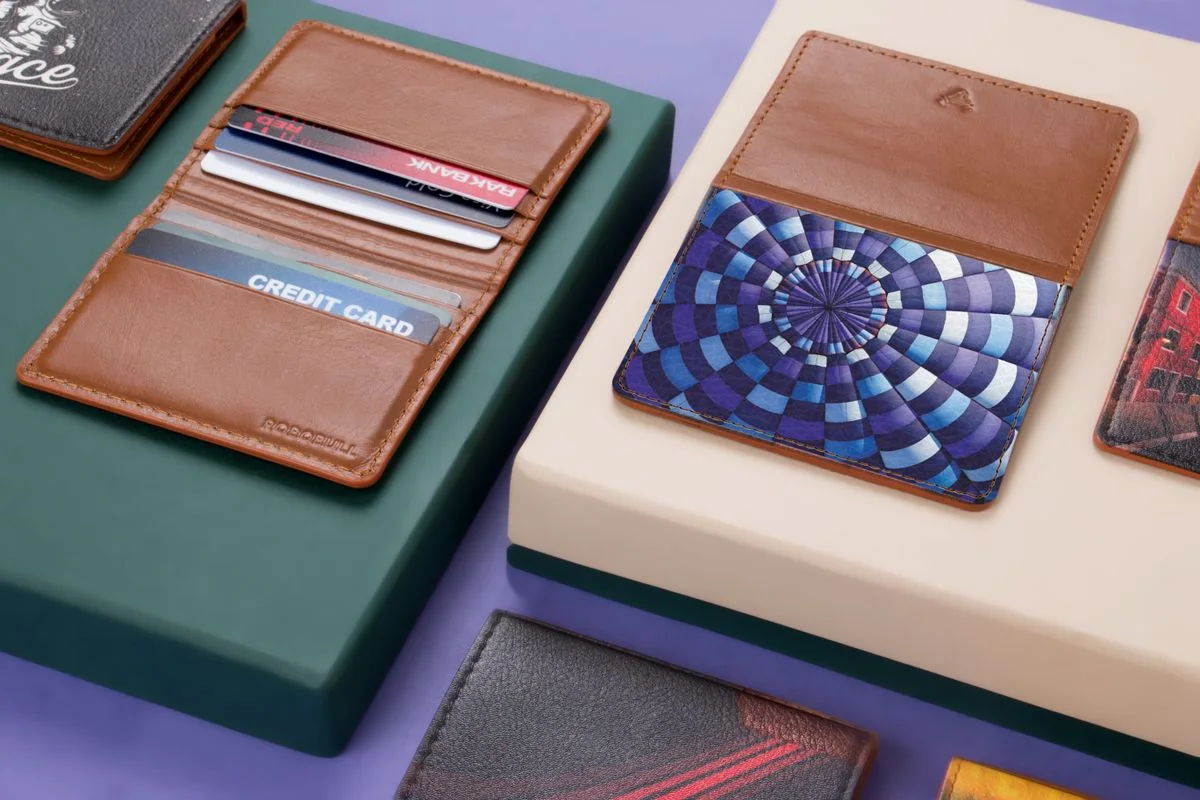
Sort the contents into daily, occasional, and rarely needed items. A slot that exposes the daily transit card can be more useful than several hidden compartments. If a card must be removed for use, check whether it can be gripped without bending the surrounding cards. Stacked-card mechanisms are compact but may require an extra motion for the card in the middle. Consider how easy it is to return the card while holding a bag or standing at a checkout.
Check cash in its actual form
Banknotes differ in size, and a wallet designed around one currency may require another to be folded. If cash is a regular part of your day, compare the note compartment with the notes you carry. A clip, a full-length section, and a folded-note pocket create different handling routines. Coins need a secure compartment if they belong in the wallet at all. Keeping occasional coins in a separate small pouch may make more sense than adding permanent bulk to every pocket.
Judge the loaded shape
The published depth usually describes an empty item. Look for photographs with the advertised number of cards installed, and notice whether the closure still sits naturally. A zip secures loose contents but takes space around the edge. A pull tab needs room to move and should not be mistaken for another storage pocket. Think about the trouser or bag pocket where the wallet lives. A slightly taller wallet can sometimes be easier to carry than a shorter one that becomes very thick.
Choose a material you can maintain
Leather, coated fabric, and rigid shells require different care. Bellroy publishes product-specific cleaning guidance; use the instructions for the actual material rather than applying a general leather treatment to every finish. Inspect stitching at pocket openings and around any zip. For a rigid case, check the method of replacing elastic or moving parts if the maker offers them. Features advertised as privacy protection should have a clear explanation, but they do not replace a practical design that suits how you pay.
THE USEFUL TAKEAWAY
A wallet offers good value when its loaded shape and access sequence suit daily payments. Count what you really carry, keep the most-used items reachable, and check cash handling before committing to a slim design. Better organization may matter more than extra compartments or another advertised technology feature.
Further information
Manufacturer and official references for the details discussed. Check instructions for the exact product you are considering.