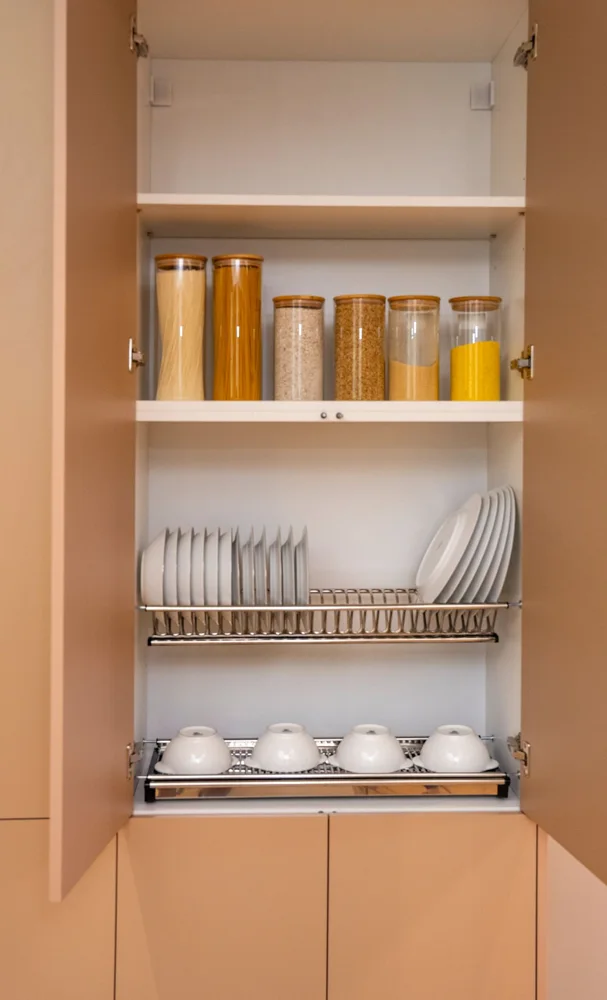
An apartment move creates many plausible purchases at once: furniture, lighting, storage, kitchen items, and small things that suddenly seem essential. Buying from a complete imagined room can lead to pieces that do not fit the actual space or duplicate what is already available. A staged wishlist is more useful than a large checkout basket. Separate the items needed to make the first days workable from purchases that depend on living in the apartment and learning how its rooms are used.
Record what comes with the apartment
Confirm appliances, fittings, furniture, and storage that are included, rather than assuming photographs show the final arrangement. Measure accessible cupboards and check the type of shelves, rails, and lighting already present. List the items you own and their dimensions. A familiar piece may fit in an unexpected role, such as a small desk becoming a dining surface temporarily. Ask about practical restrictions relevant to installation before ordering anything that depends on drilling, fixed mounting, or alterations to the apartment.
Build a first-days list around functions
Think in terms of sleeping, preparing simple meals, washing, basic cleaning, and keeping essential belongings accessible. This does not require completing every room. Identify what you can bring, borrow, or use temporarily. A small set of appropriate kitchen tools may be enough while you learn the cupboard layout. Keep arrival essentials in a clearly labelled box so they are not hidden among belongings. Purchasing one working solution is often more useful than ordering several decorative options before the move.
Delay choices that require real dimensions
Use a floor plan with door swings, outlets, radiators, and walkways marked. Measure again after arrival if the original information is incomplete. Tape furniture footprints on the floor and check everyday movement around them. Storage containers should follow the contents and shelf measurements, rather than arriving first and dictating the system. A sofa or desk also needs a delivery route, not just a wall that is wide enough. Keep tentative purchases on the wishlist until those constraints are known.
Add a decision note to every wishlist item
Record the purpose, maximum dimensions, acceptable total price, and the reason for waiting. A note such as needs a lamp near the reading chair is more useful than a saved photograph without context. Review the list after a short period of ordinary use and remove needs that have disappeared. Group delivery only when the items independently qualify for purchase. Avoid ordering extra furniture simply to make a room look finished immediately; an open space is easier to assess than a room filled with compromises.
THE USEFUL TAKEAWAY
Use a move wishlist to sequence decisions, not to justify buying a finished apartment at once. Cover essential functions first, then let measurements and daily use guide the rest. A short list with clear constraints prevents duplicate purchases and makes later choices more likely to fit the space you actually inhabit.