Storage can make a coffee table more useful, but it can also add mechanisms and compartments that are awkward to reach. Before choosing a lift top, drawer, or open shelf, decide what belongs near the sofa and how often it is retrieved. Measure the room in its normal arrangement, including the route past the table and the movement of any recliner. A useful storage table should keep everyday things accessible without making the main tabletop difficult to use.
Choose a storage job
Remote controls, a few magazines, a game, and a large blanket need different spaces. Measure the intended contents and check usable internal dimensions, including the opening. A deep central cavity can hold more but make small objects harder to find. A shallow drawer may be a better fit for the things handled daily. If the goal is simply to hide miscellaneous clutter, reduce and group the contents before buying furniture whose capacity encourages the collection to grow.
Measure the table while operating
Drawers need clearance toward the sofa or walkway. Lift tops need their stated movement space and a stable position for use. Read the mechanism's instructions and load limits rather than treating the raised surface as an ordinary desk. Items on top may need to move before you open the compartment. If access happens several times each evening, that repeated step matters. Compare the closed footprint, fully opened footprint, and the space needed for a person to reach the storage.
Keep the room route usable
Mark the tabletop and base on the floor and move around the seating area. Check the effect of reclining seats, pulled-out footrests, and doors nearby. A round table changes the corners of that route, but it does not automatically make every tight room comfortable. Nesting or movable tables may provide flexibility when used as instructed. Consider whether storage makes the table heavier to shift, especially if you regularly clear the living-room floor for another activity.
Inspect surfaces and hidden cleaning
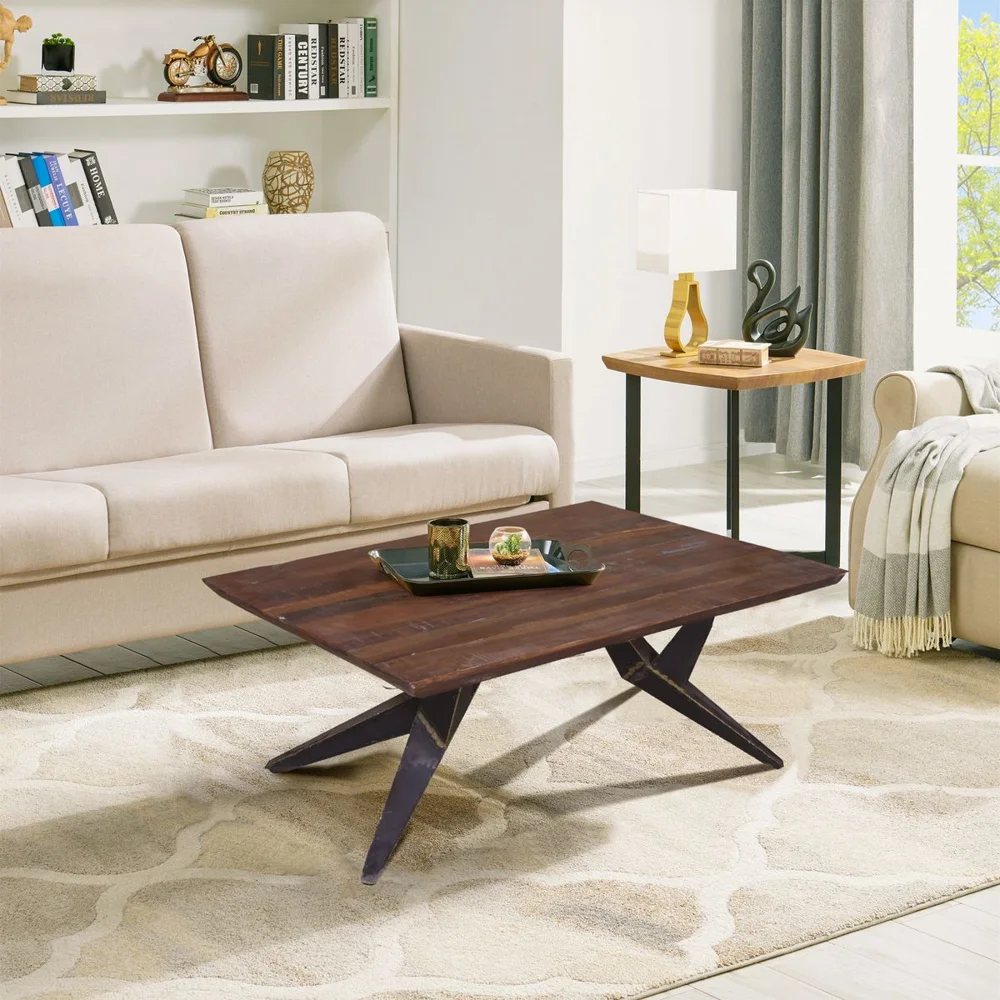
Open shelves can be easier to see but collect visible dust; drawers and cavities create different access needs. Look for areas behind mechanisms where cleaning is awkward, and follow the maker's care instructions. A veneer, painted surface, or glass top may need different treatment. Check assembly and component support if the mechanism influences the purchase. A simple lower shelf, such as those shown in IKEA's coffee-table range, may serve a modest storage need without the additional steps of a lifting top.
THE USEFUL TAKEAWAY
A coffee table's storage is useful when the contents and access method match your routine. Compare internal dimensions and the open arrangement, not just the closed footprint. Choose a straightforward shelf, drawer, or lift top for a specific job, while keeping the room comfortable to move through.
Further information
Manufacturer and official references for the details discussed. Check instructions for the exact product you are considering.