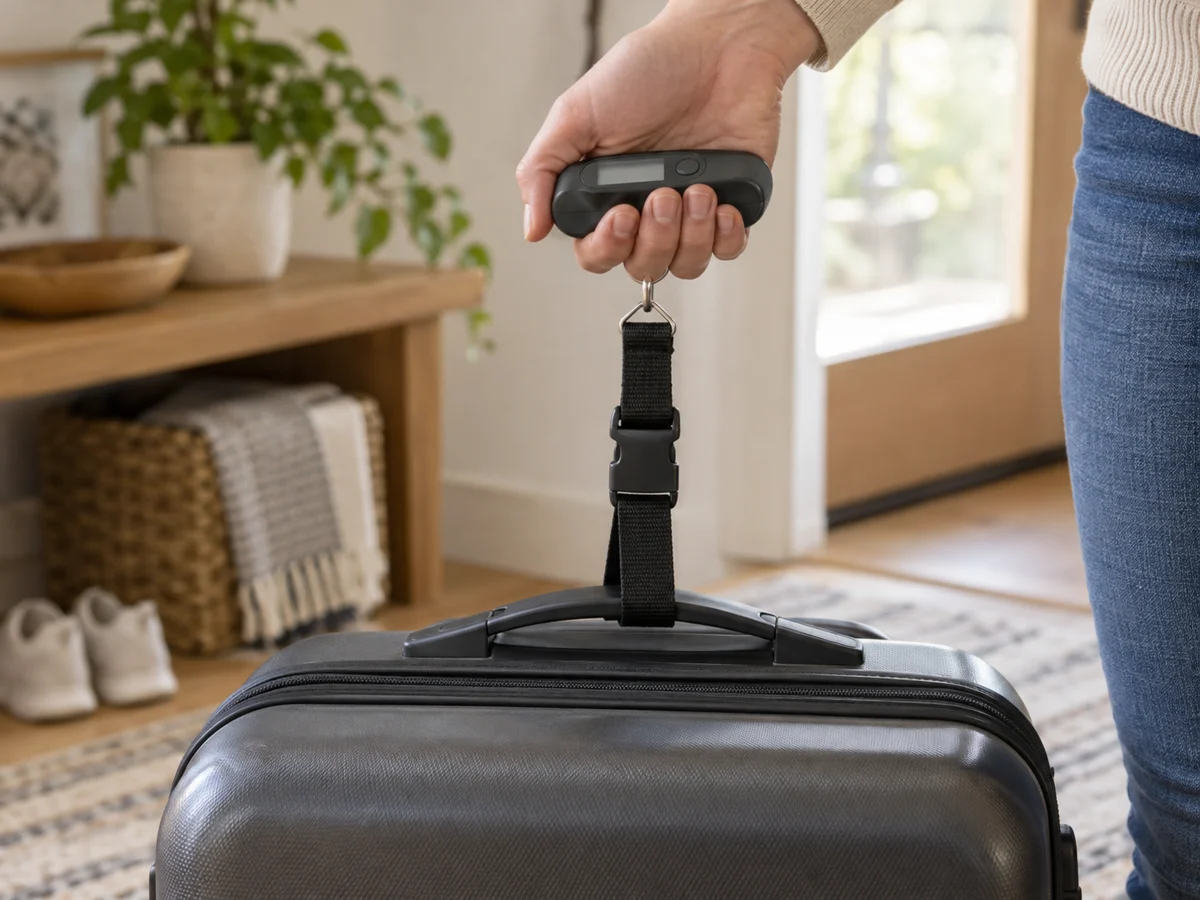
A luggage scale is useful when it helps you pack within the rules for an actual flight, but it does not set the allowance or replace the carrier's check-in measurement. Begin with the airline, fare and route, then read the current baggage policy. If you regularly travel near a weight limit, a compact scale can reduce last-minute repacking. For occasional light packing, a suitable existing scale may be enough. Choose around readable results, manageable lifting and a method you can repeat without straining or balancing an awkward suitcase.
Check which allowance applies
Read the carrier's current policy for your ticket and each relevant flight. Separate cabin-bag, personal-item and checked-bag requirements, and note whether a weight rule applies individually or in another specified way. Do not assume the allowance from a previous trip or another airline remains relevant. Size rules still matter even when a bag's weight is acceptable. Keep the policy accessible while packing and check any special conditions for the route, fare or additional items you intend to carry.
Choose a readable measurement method
Look at display position, unit selection and whether the scale holds a reading after the bag is lowered. Check the stated range and instructions for zeroing or other setup. A scale with many units is only useful if the selected unit is clear. Compare kilograms and pounds carefully and avoid interpreting a small display without checking its indicator. If calibration or verification is described, follow the maker's method rather than assuming a precise-looking decimal guarantees accuracy for every load.
Assess the lifting arrangement
A hanging scale requires lifting the packed bag using the intended strap or hook. Check compatibility with the bag handle and the scale's load limit. Follow the instructions and choose a method you can manage comfortably; a heavy suitcase may make another suitable weighing arrangement more practical. A comfortable grip and a readable hold function can help, but neither removes the lifting requirement. Do not attach the scale to an unsuitable part of the bag merely because the strap can reach it.
Leave room for ordinary variation
Weigh the bag after all expected items are packed, including anything added on the return journey. Repeat the measurement as the scale instructions describe if the result is inconsistent. Avoid planning around the final smallest display increment, since your home measurement and the carrier's equipment need not agree exactly. Check battery requirements and storage size if the scale travels with you. Keep the scale as a packing aid and use the airline's current policy, not a shopping listing, as the authority for baggage limits.
THE USEFUL TAKEAWAY
A luggage scale can make packing more predictable when used with the correct airline rules. Choose a readable, manageable tool and follow its measurement instructions. Leave a practical margin rather than relying on the smallest displayed increment, and remember that acceptable weight does not settle the bag's size or other travel requirements.
Further information
Manufacturer and official references for the details discussed. Check instructions for the exact product you are considering.