Sheet-pan size names can make shopping feel more standardized than it is. The dimensions that matter are the pan's outside edges, its usable cooking area, and the clearance required by your oven's instructions. A pan that barely passes through the door may still be awkward to remove with gloves. Measure the appliance before comparing sets, then think about the batches you actually bake and where the pan will go when the oven is needed for something else.
Measure the rack and the opening
Check the rack's usable width and depth, the oven entrance, and any intruding fittings. Refer to the oven instructions for required space around bakeware; a pan should not obstruct the way the appliance is designed to circulate heat. Product measurements may include rolled rims, so do not substitute the interior base dimensions. A cardboard outline can help you judge the handling motion while the oven is cold. Remember to include room for the gloves you normally wear.
Separate surface area from rim size
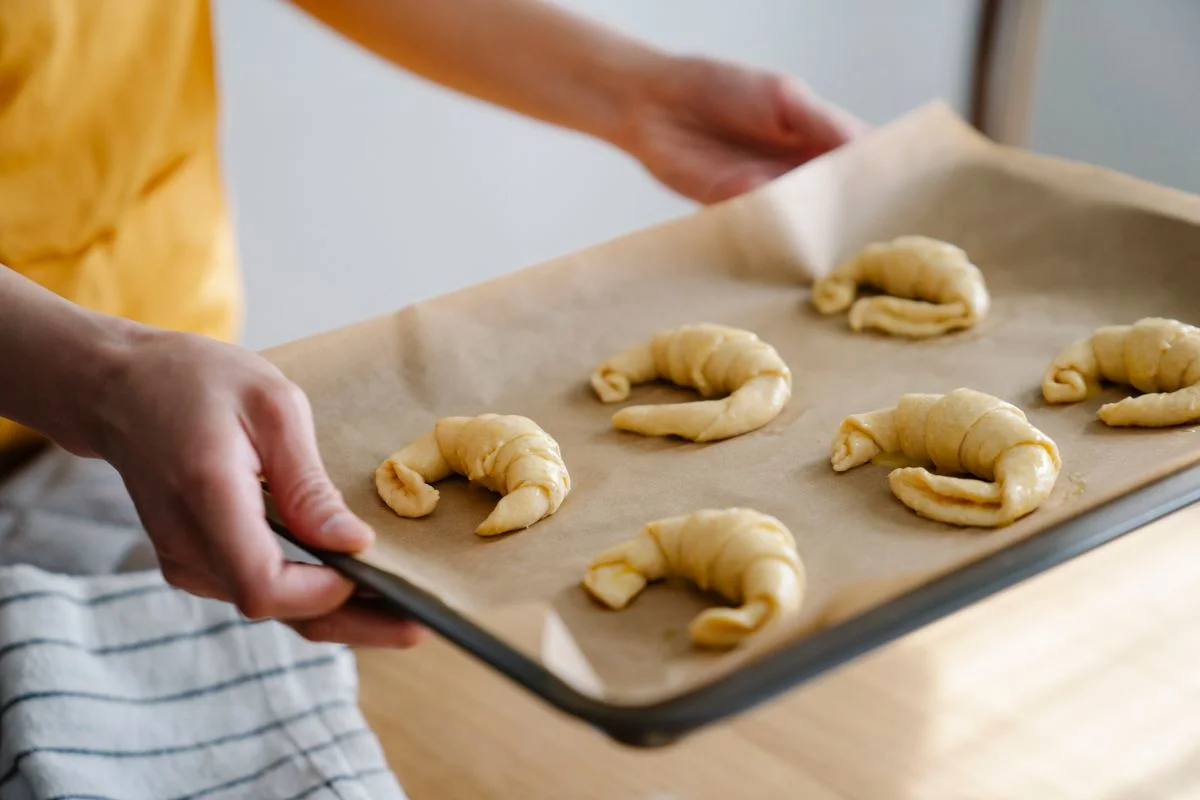
Large rolled edges and rounded corners reduce the flat space available for cookies or vegetables. Look for interior measurements or compare photographs that show the base clearly. If you bake a regular recipe, arrange a sample batch on paper at the intended spacing before deciding whether one pan is enough. Two smaller pans can offer flexibility, but only if your oven and recipe support that arrangement. More pieces do not automatically reduce the number of baking rounds.
Choose a finish around your cooking
Uncoated metal, coated bakeware, and dark finishes come with different manufacturer guidance. Read it alongside the recipes you use rather than assuming every sheet behaves identically. Nordic Ware, for example, publishes specific care information for its natural aluminum line. Check restrictions on cleaners, dishwashers, and utensils for the exact pan. If you use parchment or a reusable liner, confirm its fit and instructions too; a liner is another item whose dimensions affect the usable surface.
Consider cleaning and vertical storage
A broad pan can be difficult to wash in a compact sink, especially when the rim traps water at an angle. Measure the sink and drying area, not just the oven. For storage, an upright slot can be more convenient than the bottom of a cookware stack, provided the pan is supported. Buying one pan first lets you discover the actual limitations. A second matching sheet is worthwhile when you repeatedly need it, rather than because a multipack looks more complete.
THE USEFUL TAKEAWAY
An oven-compatible sheet pan should be easy to insert, use, remove, wash, and store. Compare its exterior footprint and interior floor separately. A single well-fitting sheet often provides better everyday value than a discounted set whose largest piece is inconvenient to handle.
Further information
Manufacturer and official references for the details discussed. Check instructions for the exact product you are considering.